








The global appetite for copper is reaching a fever pitch, driven by the twin engines of digital expansion and the green energy transition. However, as we look to the continents for new supply, the challenges are mounting. Land-based mines are increasingly remote, their ore grades are falling, and the environmental and social costs of extraction are under intense scrutiny. This realization has turned the eyes of the mining industry toward the final frontier on Earth: the deep ocean floor. The potential for deep sea copper exploration for future global mineral needs is staggering. Thousands of meters below the surface, the seabed is home to vast concentrations of high-grade copper, often found in association with other critical metals like cobalt, nickel, and manganese. While the technical hurdles are immense and the environmental concerns are significant, Mining Frontier identifies the development of a sustainable deep-sea mining industry as the key to ensuring that the world has the material resources necessary to build a carbon-neutral future.
The Geological Treasure Trove of the Abyss
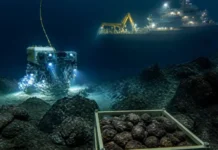
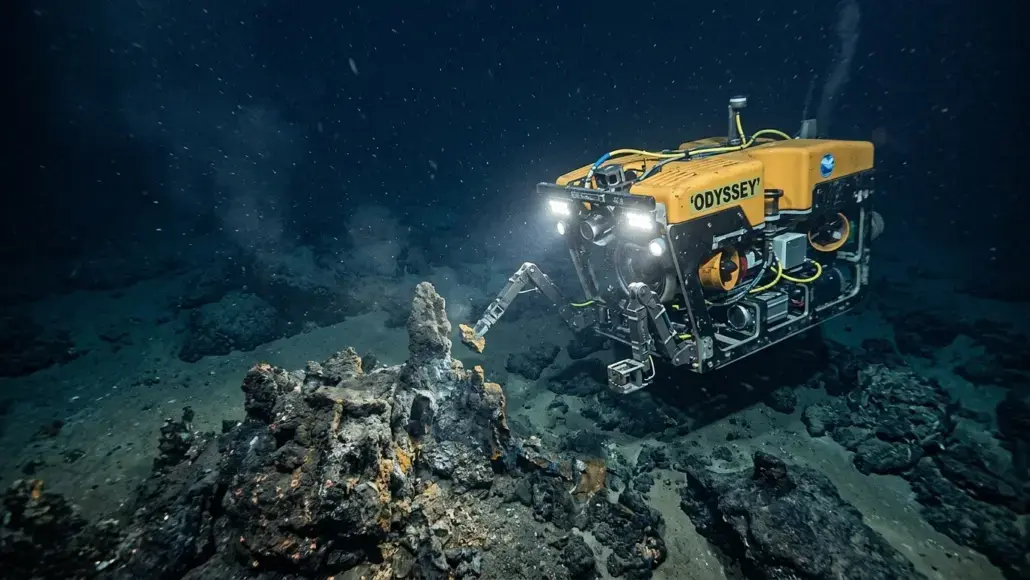
Deep-sea copper resources primarily exist in two distinct forms: polymetallic nodules and seafloor massive sulfides (SMS). Polymetallic nodules are potato-sized rocks that sit on the surface of the abyssal plains, often at depths of 4,000 to 6,000 meters. These nodules contain significant concentrations of copper, and because they are not attached to the bedrock, they can theoretically be “harvested” with specialized machinery. Seafloor massive sulfides, on the other hand, are formed by hydrothermal vents—geysers on the ocean floor that spew mineral-rich hot water. As this water meets the cold ocean, the minerals precipitate and form high-grade deposits of copper, gold, and zinc. The interest in deep sea copper exploration for future global mineral needs is driven by the fact that these underwater deposits often have copper concentrations several times higher than the best remaining mines on land, making them an incredibly attractive prospect for the long-term supply chain.
Advancements in Submarine Exploration Technology
Exploring the deep ocean is often compared to exploring outer space. It is an environment of extreme pressure, total darkness, and near-freezing temperatures. To conduct deep sea copper exploration for future global mineral needs, engineers have developed a new generation of marine technology. Autonomous Underwater Vehicles (AUVs) and Remotely Operated Vehicles (ROVs) are equipped with high-resolution sonar, optical cameras, and laser scanners to map the seabed in exquisite detail. These vehicles can descend to depths where human divers cannot survive, taking samples and measurements to identify the most promising mineral zones. Furthermore, developments in satellite communication and real-time data processing allow surface ships to coordinate these undersea operations with high precision, creating a digital “picture” of the ocean floor that was once a complete mystery.
The Environmental and Ethical Challenge
The prospect of deep-sea mining is one of the most controversial topics in modern environmental science. The deep ocean is a fragile ecosystem that we are only just beginning to understand. Critics argue that deep sea copper exploration for future global mineral needs—and the subsequent mining—could lead to the destruction of unique habitats, the extinction of undiscovered species, and the creation of massive sediment plumes that could harm marine life far from the mining site. This has led to calls for a moratorium on deep-sea mining until more research is conducted. To address these concerns, the International Seabed Authority (ISA) is working to develop a “Mining Code” that would set rigorous environmental standards for any commercial activity in international waters. The goal is to ensure that if mining does occur, it is done in a way that minimizes its “blue footprint” and preserves the biodiversity of the abyss.
Comparing Terrestrial and Marine Impacts
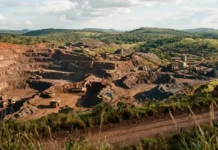
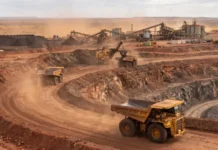
When considering the future of mineral security, it is essential to compare the impacts of deep-sea mining with those of traditional land-based operations. Land-based copper mines often require the displacement of entire communities, the clearing of vast forests, and the consumption of billions of gallons of fresh water. They also produce massive amounts of tailings waste that must be managed for centuries. In contrast, deep sea copper exploration for future global mineral needs offers a way to access high-grade minerals without the social conflict and fresh-water consumption associated with terrestrial mining. The trade-off is the potential impact on the ocean floor ecosystem. The debate is not about whether to mine, but where the total environmental and social “cost” is lower for the planet as a whole. Mining Frontier sees this complex ethical calculation is at the heart of the future of the blue economy.
The Role of Robotics in Seabed Harvesting
The actual extraction of minerals from the seabed will be a masterpiece of robotic engineering. For polymetallic nodules, companies are developing tracked “collectors”—essentially giant underwater vacuum cleaners that crawl along the seabed, pick up the nodules, and pump them to a surface ship via a riser pipe. For seafloor massive sulfides, the process involves robotic cutters that can mill the hard sulfide rock into a slurry. These autonomous machines must be able to operate for months at a time without maintenance in one of the most hostile environments on Earth. The development of these systems is driving innovation in materials science, underwater power transmission, and autonomous control algorithms, with many of the technologies likely to find applications in other offshore industries like renewable energy and telecommunications.
Economic Viability and Global Mineral Security
The economic case for deep sea copper exploration for future global mineral needs is becoming stronger as the price of critical minerals rises. While the initial capital investment is high, the high grade of the ore and the lack of traditional mining infrastructure (like roads, railways, and power lines) could make deep-sea mining competitive with new terrestrial projects. Furthermore, for nations without significant land-based resources, the ocean floor offers a path to mineral sovereignty. By securing access to seabed deposits, countries can protect their tech industries from supply shocks and price spikes. The strategic importance of these minerals has led to a surge in exploration licenses granted by the ISA, with many major economies now actively surveying the Clarions-Clipperton Zone in the Pacific Ocean.
Looking Toward a Sustainable “Blue Mining” Model
The future of the industry depends on its ability to prove that it can operate sustainably. This includes developing “closed-loop” systems that minimize sediment disturbance and ensuring that no toxic chemicals are used in the extraction process. Some companies are even exploring the idea of using the surface ships as mobile renewable energy plants, utilizing wind or wave power to drive the mining machinery. The goal is to create a “blue mining” model that is carbon-neutral and environmentally transparent. By integrating real-time monitoring sensors into the mining equipment, researchers can track the impact on the surrounding environment and adjust operations instantly if any unforeseen harm is detected. This data-driven approach is essential for gaining the public trust needed to move from exploration to commercial production.
International Cooperation and the Common Heritage of Mankind
The legal status of the deep ocean adds another layer of complexity. Under the UN Convention on the Law of the Sea, the seabed in international waters is considered the “common heritage of mankind.” This means that the benefits of deep sea copper exploration for future global mineral needs must be shared with the global community, particularly with developing nations. The ISA is tasked with managing these resources and ensuring that the revenue from mining is used to support global sustainable development. This unique international framework provides an opportunity for a new kind of global cooperation, where the world’s oceans are managed collectively for the benefit of all, rather than being carved up into competing national territories.
Conclusion: A New Horizon for the Human Story
The journey to the bottom of the sea is the next great chapter in the human story of resource exploration. As we face the unprecedented challenge of re-engineering our entire global energy system, the resources of the deep ocean offer a beacon of hope. Deep sea copper exploration for future global mineral needs is more than just a search for metal; it is a test of our ability to balance our technological aspirations with our responsibility as stewards of the Earth. By combining the best of our engineering prowess with a deep respect for the marine environment, we can unlock the potential of the abyss to build a cleaner, more sustainable future. Mining Frontier highlights that the copper that lies in the darkness of the ocean floor may soon be the very material that brings light and power to a new, green era of human progress.