






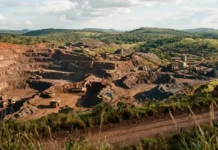
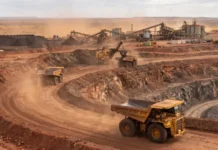
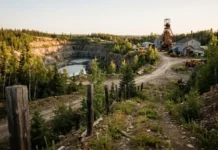
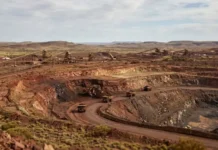
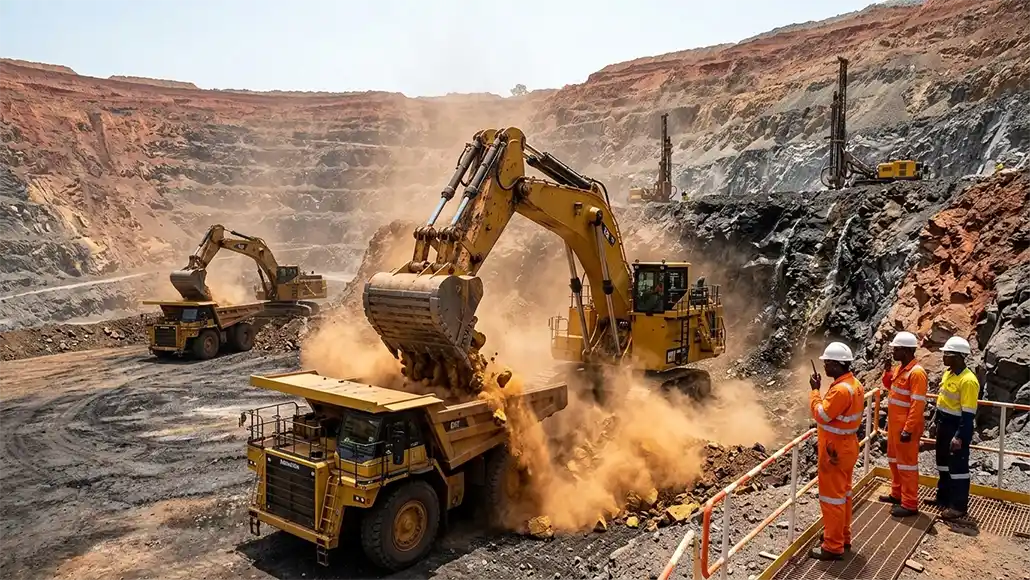

There is a big change happening in the mining industry in Ghana. The Engineers and Planners Company Limited, which happens to be the largest native company of the country, and two other bidders have shown interest in taking over operations at the Damang gold mine located in the Western Region.
Ghana is moving the Damang gold mine from the control of the multinational company Gold Fields to local ownership. It is well to be noted that there are three local companies that are being considered as bidders.
The mine needs about $1 billion in investment to be fixed up after the government decided not to renew Gold Fields’ lease after almost 30 years.
Engineers and Planners Company Limited, which is led by Ibrahim Mahama, is in the lead because it has worked on the site before and just got $205 million in financing.
International groups such as the U.S. and China have opposed Ghana’s mining reforms, which include higher royalties along with stricter local content rules.
Authorities have begun looking over three proposals from local investors to take over the asset. It is thought that it will take up to $1 billion in new investment to bring production back to full speed.
The process comes after the government decided to take over the mine that South Africa’s Gold Fields had been running for nearly a year after turning down the request from the company to renew its lease.
Reuters says that the bidders who made the final list are Engineers and Planners Company Limited and BCM International, as well as the Vortex Resources consortium. Regulators are now looking at which of the applicants is most likely to deal with the operational and financial problems of the mine.
In April, Ghana, which wants to get more locals involved in its mining industry, refused to extend the existing lease of the Johannesburg-based operator. This was indeed a break from the usual practice of automatic renewals.
The change happens as Gold Fields Limited, which is a South African mining company, leaves one of the oldest gold-producing assets of Ghana after nearly 30 years of operation.
CEO Mike Fraser said that Gold Fields had asked for more time, but the government wanted the asset to go to local ownership instead.
Engineers and Planners, a company that is run by Ghanaian billionaire Ibrahim Mahama, has been a long-term contractor at Damang. This arrangement has given them a lot of experience with the mine’s systems as well as workers.
Earlier in March 2026, Stanbic Bank Ghana, along with Standard Bank of South Africa, helped E&P get a US$205 million loan package. Ecobank Ghana as well as Absa Bank Ghana also assisted.
The money will help with upgrading equipment, making hard-rock mining more efficient, and also increasing long-term operational capacity. This shows that people are becoming more confident that local companies can handle big mining assets. Ghana has made significant changes when it comes to its mining laws in the last few years, focusing on royalty structures and local content rules, along with tax policies to keep more of the country’s mineral wealth.
These include proposals to substitute the long-standing fixed 5% royalty with a sliding scale of up to 12%. There will also be tougher regulations for Ghanaian companies that want to buy things in the country and participate.
But the U.S. and other important mining stakeholders have strongly opposed these changes.
Along with China, the UK, and Canada, as well as Australia, Washington has put unusual coordinated diplomatic pressure on Ghana so as to rethink or scale back the policy. They have warned that higher royalties could make the country one of the most expensive places in Africa to mine and scare away investment.
The U.S. position is very similar to what global mining companies are concerned about. They say that the proposed rates could cut into profits, slow down new projects, and lower output over the long term.
Ghana has said it will proceed with the reforms anyway. It sees them as part of a larger trend across Africa toward resource nationalism, where governments want to get greater value from rising commodity prices and rely less on foreign companies.
According to Gold Fields’ feasibility study, Damang could produce 100,000 to 150,000 ounces of gold each year for at least nine more years. However, the company would need to raise $500 to $600 million in new capital to keep the mine running.
It is well to be noted that the Minerals Commission and other agencies keep an eye on things to make sure that all mining companies in Ghana adhere to the rules.