













Key Takeaways
- A circular carbon economy reframes mining from a linear extractive model to a system focused on carbon management and resource circularity.
- Mining companies must integrate energy transition, process efficiency, and circular value chains to achieve credible net-zero trajectories.
- Strategic collaboration across the value chain is essential to align mineral supply with global climate and circular economy goals.
The Future of Mining in a Circular Carbon Economy
Global decarbonisation pressures are forcing every sector to reconsider its role in the climate transition, and mining is no exception. As the provider of critical minerals for clean energy technologies, infrastructure, and digital systems, mining is both an enabler of a low-carbon future and a significant source of greenhouse gas emissions. Reconciling these roles is at the heart of emerging thinking on circular carbon mining and the broader circular carbon economy.
A circular carbon economy goes beyond the traditional reduce, reuse, recycle framing of a circular economy. It focuses specifically on managing carbon flows throughout the system – reducing emissions where possible, reusing carbon through technologies such as carbon capture and utilisation, and recycling carbon-based materials. For mining, this means reimagining how projects are planned, powered, operated, and integrated into value chains so that carbon is treated as a managed resource rather than an externality.
From Linear Extraction to Circular Carbon Systems
Historically, mining has been organised around a linear model: extract ore, process it, sell products, manage waste, and eventually close the site. Emissions from fuel combustion, electricity consumption, chemical reagents, and land-use change were largely considered unavoidable side-effects, managed mainly through compliance with local regulations.
In a circular carbon economy, this model is no longer sufficient. Circular carbon mining requires companies to map and actively manage carbon flows across the full life cycle of their activities. This includes Scope 1 emissions from on-site combustion and process reactions, Scope 2 emissions from purchased electricity and heat, and Scope 3 emissions that occur upstream and downstream, such as those from suppliers and customers.
Such a holistic perspective forces a re-evaluation of project economics and design choices. Decisions about mine location, energy infrastructure, processing routes, and product specification are increasingly made with both financial and carbon performance in mind. Investors, customers, and regulators are converging around expectations that credible net-zero mining commitments will be backed by concrete circular carbon mining strategies.
Decarbonising Energy Use in Mining
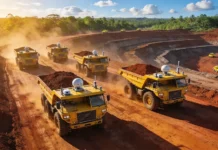
The most immediate lever for aligning mining with a circular carbon economy lies in energy. Diesel consumption in mobile equipment and fossil-based electricity for processing plants account for a large portion of operational emissions. Shifting to low-carbon energy sources is therefore foundational.
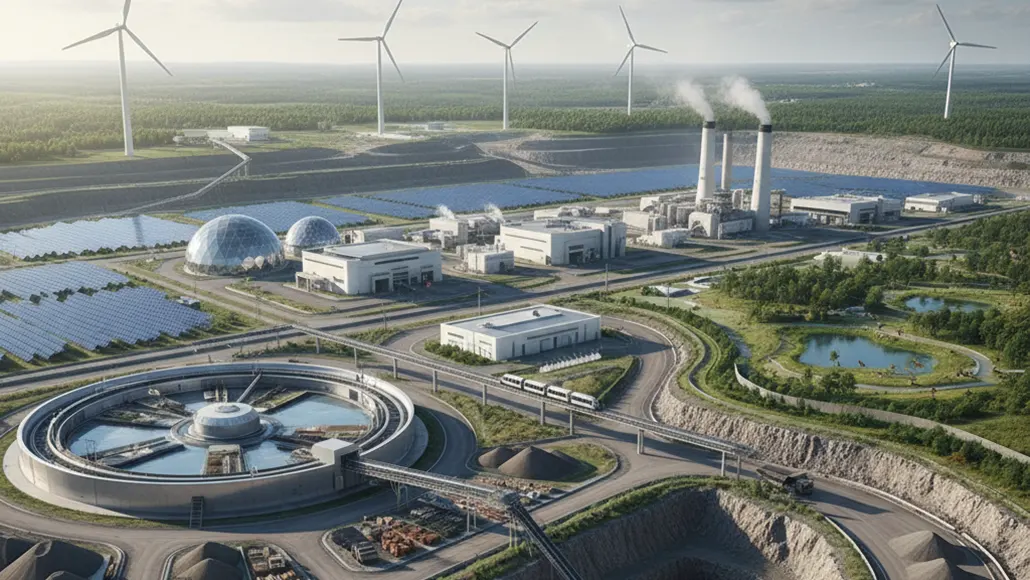
Mine decarbonisation strategies typically follow a hierarchy. First, reduce overall energy demand through efficiency measures such as optimised comminution, improved ventilation, and better process control. Second, electrify where technically feasible – replacing diesel-powered haul trucks, loaders, and auxiliary equipment with electric alternatives. Third, supply that electricity from low-carbon sources, including on-site or grid-connected renewable energy for mining.
In some cases, residual energy needs may be met by low-carbon fuels such as green hydrogen, synthetic fuels, or sustainable bioenergy. Hybrid solutions that combine renewable generation, battery storage, and flexible gas or hydrogen turbines can provide reliable power for remote operations while maintaining a low emissions profile.
Over time, circular carbon mining will push companies to consider not just operational emissions but the embodied carbon of their energy infrastructure itself – from solar panels and wind turbines to batteries and transmission lines. Choices about technology suppliers, materials, and end-of-life management will influence the overall carbon footprint.
Reinventing Process and Waste Management
Beyond energy, process emissions and waste streams represent both a challenge and an opportunity in a circular carbon economy. Many metallurgical processes, particularly for commodities like steel, cement, and certain base metals, involve inherent chemical emissions. While some of these occur downstream of the mine, there is growing interest in how mining operations can support or host low-carbon processing routes.
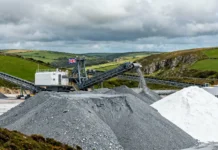
At the mine level, tailings and waste rock management are central to circular carbon mining. Traditionally treated as liabilities to be contained and monitored, these materials are increasingly viewed as potential resources. Circular tailings management explores ways to recover residual metals, reprocess fine particles, and repurpose materials for construction or backfill. Doing so can reduce the footprint of storage facilities, lower long-term environmental risks, and, in some cases, generate revenue.
There is also a growing body of research into using certain tailings and waste rocks as carbon sinks. Through processes such as mineral carbonation, reactive minerals can bind atmospheric or industrial CO2 into stable carbonates, effectively turning mine wastes into tools for carbon capture and utilisation in mining contexts. While still emerging, these technologies align closely with the principles of a circular carbon economy.
Reducing water use and improving water quality is another dimension. Energy-efficient dewatering, closed-loop water circuits, and advanced treatment systems reduce both operational risk and the embedded energy – and hence carbon – associated with water management.
Linking Primary Production with Recycling and Urban Mining
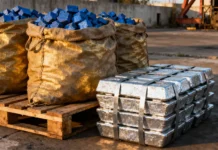
A circular carbon economy cannot be achieved through primary production alone. Metal recycling and urban mining are essential complements that reduce the need for new extraction and lower overall life-cycle emissions of minerals. For mining companies, this raises strategic questions about their role beyond the mine gate.
Some producers are integrating downstream into recycling and secondary metal production, leveraging their metallurgical expertise and market access. By designing products and supply agreements that facilitate high recovery rates at end of life, they help close material loops and reduce the carbon intensity per unit of service delivered to end users.
Circular carbon mining strategies also influence product specification. For example, supplying higher-purity concentrates or intermediates that enable more energy-efficient downstream processing can reduce total system emissions even if mine-site impacts are slightly higher. Collaborating with smelters, refiners, and end-use manufacturers to optimise the combined footprint is a core principle of circular value chains for critical minerals.
Designing Mines for Climate Resilience and Circularity
Climate risk is an increasingly important dimension of mine planning. Operations face physical risks from changing precipitation patterns, extreme weather events, and temperature shifts. In a circular carbon economy, climate-resilient mine design is intertwined with emissions management and resource circularity.
From the outset, projects can be designed with modular infrastructure that can evolve as technologies and climate policies change. For example, mines can reserve space and grid capacity for future renewable energy expansions, electric fleet charging, or hydrogen production. Integrated waste and water systems can be designed to support future tailings reprocessing, mineral carbonation, or local industrial uses.
Progressive rehabilitation and land-use planning that anticipates post-closure uses – such as renewable energy parks, nature-based carbon sinks, or industrial zones – further align mining with circular carbon outcomes. In some cases, former mine sites can become hubs for circular economy activities, hosting recycling, materials recovery, or green manufacturing facilities that leverage existing infrastructure.
Governance, Transparency and Market Signals
Aligning mining with a circular carbon economy also depends on governance and market structures. Transparent reporting on Scope 1, 2, and 3 emissions, science-based targets, and credible transition plans are becoming prerequisites for access to capital and premium customer segments. Standards and taxonomies that define what constitutes low-carbon or transition minerals influence which projects attract investment.
Carbon pricing, climate-related financial disclosure requirements, and green procurement policies send economic signals that reward circular carbon mining practices. For example, automakers and technology companies may prioritise suppliers that can demonstrate low life-cycle emissions for lithium, cobalt, nickel, and rare earths, aligning procurement with their own net-zero commitments.
Voluntary initiatives such as responsible mining schemes, certification frameworks, and green bond principles further embed expectations around emissions, biodiversity, and social performance. Mining companies that proactively adopt circular carbon mining principles are well positioned to differentiate their products and strengthen relationships with downstream customers.
Collaboration Across the Value Chain
No single company can deliver a circular carbon economy alone. The complexity of mineral supply chains demands collaboration between miners, processors, manufacturers, policymakers, and consumers. Joint roadmaps for specific commodities – such as green steel, low-carbon aluminium, or climate-aligned copper – illustrate how circular carbon mining fits into broader sectoral transitions.
Partnerships can facilitate shared infrastructure, co-investment in renewable energy for mining regions, and coordinated research on technologies such as carbon capture and utilisation, advanced recycling, and digital traceability. Data platforms that track material flows and carbon footprints across multiple actors help identify hotspot areas for intervention and verify progress against targets.
Engagement with communities and workers is equally important. Circular carbon mining should support just transitions by creating quality jobs in new activities such as renewable energy, rehabilitation, recycling, and environmental monitoring. Transparent dialogue about trade-offs, benefits, and risks builds trust and ensures that climate actions do not exacerbate existing inequalities.
A Strategic Imperative, Not a Niche Option
The future of mining in a circular carbon economy is not a niche scenario reserved for a handful of pioneers; it is rapidly becoming a strategic imperative. As demand for critical minerals surges in tandem with global climate action, scrutiny of how those minerals are produced will only intensify. Companies that embed circular carbon mining principles into their portfolios will be better positioned to secure financing, navigate regulatory change, and win the confidence of customers and communities.
Ultimately, aligning mining with a circular carbon economy is about redefining value. Success will be measured not only in tonnes and grades but also in emissions avoided, resources conserved, and ecosystems restored. The transition will be complex and uneven, but those who move early and strategically will help shape new standards for what responsible, future-ready mining looks like.