











Key Takeaways
- Localised mining supply chains and regional manufacturing hubs reduce risk, cost, and lead times for critical equipment.
- Strategic localisation policies can turn mineral endowments into broader industrial and technological capabilities.
- Collaboration between miners, OEMs, and governments is essential to build competitive, sustainable manufacturing ecosystems.
Supply Chain Localisation and Mining Equipment Manufacturing Hubs
Mining has always been shaped by logistics. Moving heavy equipment, spare parts, fuel, and consumables to often remote sites is a complex, costly, and risk-prone undertaking. For decades, globalised supply chains, centralised manufacturing, and just-in-time delivery models promised efficiency. Recent disruptions – from pandemics to geopolitical tensions and extreme weather – have exposed their fragility. In response, mining companies and policymakers are rethinking where and how critical equipment and components are produced. The result is a growing focus on localised mining supply chains and the development of regional mining equipment manufacturing hubs.
For resource-rich countries and regions, this shift represents both a necessity and an opportunity. On the one hand, operations need greater resilience against shocks in global shipping, currency volatility, and trade restrictions. On the other, there is a chance to translate mineral endowments into broader industrial capabilities, jobs, and technology transfer. Localised mining supply chains are thus at the heart of a new approach to resource-based development.
Why Mining Supply Chains Are Being Reconfigured
Several converging forces are driving attention toward localised mining supply chains. The first is risk. The experience of widespread border closures, port congestion, and manufacturing shutdowns revealed how dependent many mines are on a small number of overseas suppliers for essential components. Delays in receiving tyres, drill bits, pumps, or control system parts can directly impact production and safety.
Second, cost structures are changing. Rising freight rates, extended lead times, and volatility in exchange rates have eroded some of the advantages of long, lean supply chains. At the same time, technologies such as advanced machining, automation, and additive manufacturing are reducing the minimum efficient scale of production. This makes it more feasible to establish competitive mining equipment manufacturing hubs closer to end users.
Third, expectations around local content in mining have intensified. Host governments and communities increasingly demand that a greater share of value be captured locally, not only through royalties and wages but also via procurement and industrial linkages. Well-designed localisation in mining can satisfy these expectations while also improving operational performance.
From Import Dependence to Regional Manufacturing Hubs
Transitioning from heavily import-dependent models to robust regional mining equipment manufacturing hubs is a gradual process. It typically begins with relatively simple activities such as assembly, fabrication of basic structures, and repair and overhaul services. Over time, as capabilities deepen and demand becomes more predictable, production can expand into components, sub-systems, and eventually full equipment lines.
For mining companies, supporting this progression means providing clear, long-term visibility into requirements. Framework agreements, volume commitments, and collaborative planning sessions help potential manufacturers invest with confidence. Information-sharing about standards, technical specifications, and quality expectations is equally important.
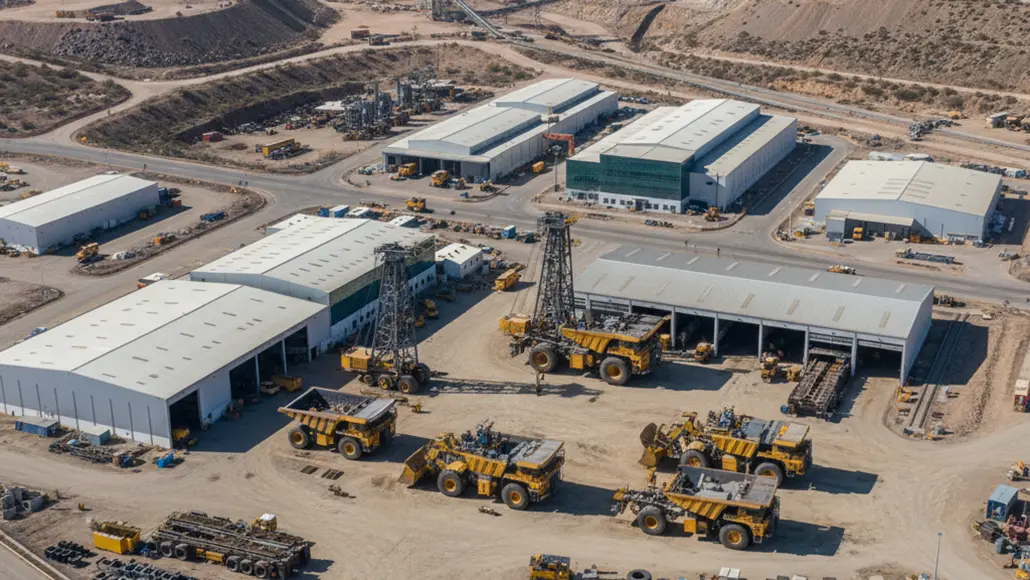
Mining OEM localisation strategies are a key lever. International OEMs can establish regional plants or joint ventures with local partners, transferring designs, processes, and training. In some cases, government incentives and infrastructure support make it attractive to base not only assembly but also engineering and product development functions in emerging mining equipment manufacturing hubs. This, in turn, nurtures local design and innovation capacity.
Spare parts manufacturing and component remanufacturing are often early success stories. Producing wear parts, liners, castings, and fabricated structures locally can drastically cut lead times and logistics costs while creating skilled jobs. Remanufacturing engines, transmissions, and hydraulic systems extends asset life and reduces waste, aligning localised mining supply chains with sustainability objectives.
Designing Resilient, Efficient Local Supply Chains
Localisation is not simply about moving production closer to mines; it is about designing supply networks that are both resilient and efficient. This involves careful segmentation of which items should be sourced locally, regionally, or globally based on criticality, demand patterns, technical complexity and cost.
Highly specialised components with low turnover and stringent IP constraints may still be best sourced from global centres of excellence. Conversely, high-volume consumables, structural components, and items with high transport cost-to-value ratios are strong candidates for local or regional production. Mining logistics optimisation tools, backed by good data, can map these trade-offs and support decision-making.
Regional mining clusters play a vital role in making localised mining supply chains economically viable. When multiple operations within a geography coordinate their procurement strategies, they create a larger, more stable demand base. This scale justifies investments in shared facilities, such as testing laboratories, heat treatment plants, or logistics hubs, which individual mines could not sustain alone.
Infrastructure is another enabler. Efficient road, rail, and port connections, reliable power, and digital connectivity all determine whether a mining equipment manufacturing hub can compete. Strategic investment in infrastructure corridors that serve both mines and industrial parks magnifies the benefits of localisation.
Local Content, Policy, and Governance
Governments have a significant influence on the pace and quality of localisation in mining. Well-crafted local content policies can encourage investment in localised mining supply chains without imposing unrealistic requirements that undermine competitiveness.
The most effective frameworks are transparent, predictable, and developed in consultation with industry. They set clear targets for local procurement, skills development, and technology transfer while allowing flexibility in how companies achieve them. They also recognise the time required to build capabilities and avoid sudden, rigid thresholds that can distort markets.
In parallel, governments can use incentives – such as tax breaks, land access, and infrastructure support – to attract mining equipment manufacturing hubs. Aligning these incentives with performance metrics on employment, training, environmental standards, and export potential helps maximise public benefits.
Robust governance and anti-corruption measures are essential to ensure that localisation in mining delivers genuine, broad-based gains rather than concentrating rents among a small group of intermediaries. Open reporting on local procurement and supplier development, along with independent verification where appropriate, builds trust.
Sustainability and Circularity in Localised Supply Chains
Localised mining supply chains are often framed in terms of risk and economic development, but they also have important environmental dimensions. Shorter transport distances can reduce emissions associated with shipping heavy equipment and materials. Regional manufacturing can be designed from the outset with modern energy-efficient technologies, waste minimisation, and circular economy principles.
Remanufacturing and repair hubs in mining equipment manufacturing centres extend the life of assets and components, reducing the need for virgin material extraction and lowering lifecycle emissions. Local recycling of metals and other materials used in mining equipment can further embed circularity into the value chain.
Sustainable procurement strategies complement these efforts by embedding environmental and social criteria into supplier selection and evaluation. Local suppliers that adopt high standards in labour practices, safety, and environmental management become partners in delivering responsible mining, not merely cost-competitive vendors.
Skills, Technology, and Innovation Spillovers
Developing localised mining supply chains inevitably raises the question of skills. Advanced manufacturing, quality control, and digital supply chain management all require specialised capabilities. Investment in technical education, apprenticeships, and continuous professional development is therefore central to success.
Mining companies, OEMs, and governments can collaborate with vocational institutes and universities to align curricula with the needs of regional mining clusters. Dual training models, where apprentices split time between classrooms and factory floors or mine sites, have proven effective in building practical expertise.
Over time, mining equipment manufacturing hubs can become centres of broader industrial innovation. Engineering firms that begin by serving mines often diversify into other sectors such as construction, energy, and infrastructure. Digital solutions developed for tracking mining inventories or optimising fleet maintenance can be adapted to other logistics-intensive industries. In this way, localised mining supply chains seed wider economic diversification.
Technology adoption in these hubs is not limited to manufacturing. Digital platforms for procurement, inventory management, and logistics provide transparency and efficiency. Additive manufacturing holds promise for producing complex, low-volume components on demand, further reducing lead times and inventory costs. Data analytics can forecast demand patterns and identify shared opportunities across mining customers.
Strategic Collaboration for Long-Term Impact
The full potential of localised mining supply chains and mining equipment manufacturing hubs is realised only when stakeholders collaborate strategically. Mining companies must look beyond short-term price considerations and recognise the long-term advantages of resilient, responsive local ecosystems. OEMs need to view regionalisation not as a regulatory burden but as a pathway to stronger customer relationships and new markets. Governments must provide a stable policy environment, invest in enabling infrastructure, and avoid micromanaging commercial decisions.
Structured platforms for dialogue – such as mining industry councils, local content roundtables, and public-private task forces – can help align expectations and coordinate action. Shared roadmaps that set out milestones for capability development, infrastructure rollout, and policy refinement keep efforts on track.
In the end, localised mining supply chains are not a retreat from global integration but an evolution toward a more balanced, resilient system. By combining the efficiencies of international specialisation with the robustness and developmental benefits of regional hubs, the mining sector can better withstand shocks, deliver on sustainability commitments, and contribute more meaningfully to the long-term prosperity of the regions in which it operates.