



















Key Takeaways
- Industrial IoT sensor networks enable continuous real-time monitoring of mining equipment, identifying developing problems weeks or months before failure occurs
- AI-powered predictive failure detection reduces unplanned downtime by 30-50% while extending equipment service life by 15-25%
- Integration of multiple sensor types—vibration, temperature, pressure, acoustic—creates comprehensive equipment health profiles that machine learning systems analyze for failure pattern recognition
- Remote monitoring capabilities allow centralized technical support teams to diagnose equipment problems from distant locations, essential for geographically dispersed mining operations
- Predictive maintenance scheduling achieved through IoT-AI integration reduces overall maintenance costs by 20-40% compared to traditional schedule-based or reactive maintenance approaches
- Early failure detection prevents cascade failures where single component failure triggers damage to downstream equipment and extended production disruptions
Mining operations depend on continuous equipment performance under challenging conditions. Haul trucks navigate rough terrain repeatedly, crushers process abrasive materials containing rocks that damage components, grinding mills operate continuously at extreme loads, and flotation circuits maintain constant flow despite changing ore characteristics. These demanding operating environments accelerate equipment wear and increase failure probability compared to many industrial operations.
Historically, mining companies addressed equipment reliability through scheduled maintenance programs. Equipment received maintenance at predetermined intervals regardless of actual condition, often replacing components prematurely while sometimes missing developing problems. This approach wasted resources through unnecessary maintenance while occasionally missing critical issues. Industrial Internet of Things technology transforms this reactive approach into predictive systems that assess actual equipment condition continuously.
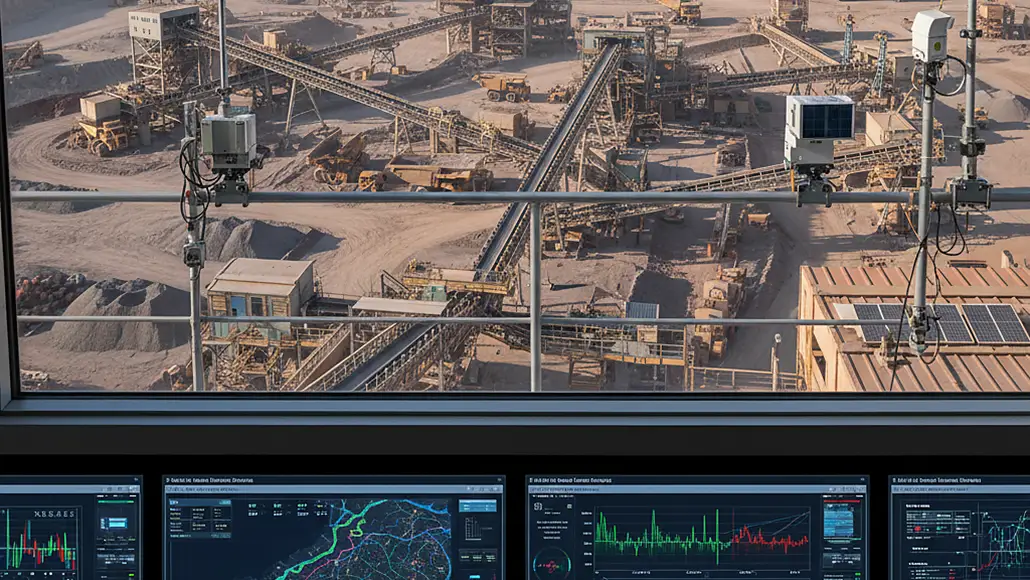
Modern industrial IoT systems deploy sensor networks across mining equipment and facilities. Temperature sensors monitor bearing and motor heat, vibration sensors detect mechanical imbalances and bearing degradation, pressure sensors track hydraulic system integrity, acoustic sensors identify developing friction problems, and chemical sensors analyze oil quality and equipment operation state. These diverse sensor types provide comprehensive insight into equipment health. When combined with artificial intelligence analytics, sensor data becomes predictive intelligence that guides maintenance decisions.
Sensor Technology and Data Collection Infrastructure
The foundation of IoT predictive mining reliability relies on sophisticated sensor technology specifically engineered for harsh mining environments. These sensors must function reliably despite temperature extremes, moisture, dust, vibration, and chemical exposure common in mining operations. Sensor selection must balance measurement precision against durability and cost considerations.
Vibration sensors represent one of the most important sensor types for mining equipment monitoring. Mechanical failures develop as component wear progresses. Increased vibration frequently signals bearing degradation, seal leakage, alignment issues, or developing cracks in structural components. By monitoring vibration signatures continuously, systems detect developing problems long before catastrophic failure occurs. Different equipment types generate distinctive vibration patterns when operating normally, and machine learning systems learn these normal patterns, immediately flagging deviations that indicate developing problems.
Temperature monitoring provides complementary information about equipment condition. Abnormal heat generation often signals friction issues, bearing degradation, or excessive load conditions. Rising temperature trends—even when absolute values remain within acceptable ranges—frequently precede failure by days or weeks. By monitoring temperature continuously and analyzing trends, AI systems identify when thermal conditions suggest developing problems requiring attention.
Oil analysis capabilities integrated into modern monitoring systems provide detailed information about internal equipment condition. As mechanical components wear, wear particles accumulate in lubricating oil. Chemical analysis of these particles reveals which components are degrading, how rapidly degradation progresses, and whether conditions have developed that suggest imminent failure risk. When combined with temperature and vibration data, oil analysis provides comprehensive understanding of equipment mechanical condition.
Modern mining IoT systems often employ wireless sensor networks rather than dedicated wired sensor connections. Wireless technologies like LoRaWAN, which provides long-range communication with minimal power consumption, enable sensor deployment across large mining areas without extensive cabling infrastructure. This flexibility allows mining operations to deploy monitoring on mobile equipment like haul trucks and excavators, equipment that moves across the mining site and would be difficult to wire with traditional infrastructure.
Machine Learning Analysis of Sensor Data Streams
The volume of data generated by comprehensive sensor networks deployed across mining operations would overwhelm human analysts. A single large haul truck might carry a dozen sensors generating data every second. A mining operation with hundreds of haul trucks generates billions of data points daily. Without intelligent processing systems, this information would become meaningless noise. Machine learning algorithms transform sensor data streams into actionable insights about equipment condition.
Supervised learning approaches train machine learning models using historical data from equipment failures. When equipment fails, analysis identifies what sensor readings preceded the failure. Models trained on many historical failures learn patterns that precede specific failure modes. When the model detects similar patterns developing in current operational equipment, it alerts maintenance teams before actual failure occurs. This approach works particularly well for equipment with documented failure histories.
Unsupervised learning approaches identify anomalies in sensor data without requiring pre-existing failure examples. Equipment operating normally generates sensor readings within characteristic ranges. When readings deviate significantly from normal patterns, the system flags anomalies for human investigation. This approach proves valuable for novel failure modes—failures that occurred rarely or never in operational history, and therefore lack historical examples to train traditional predictive models.
Time-series analysis techniques reveal trends in sensor readings that individual readings might not expose. Equipment might operate within acceptable parameter ranges but with readings trending toward concerning values. A bearing temperature that remains within acceptable ranges but increases steadily might indicate progressing wear that will eventually cause failure if unchecked. By analyzing data over time, machine learning systems identify concerning trends and alert maintenance teams before absolute values exceed safe limits.
Predictive Failure Detection and Maintenance Scheduling
The practical value of IoT predictive mining reliability manifests in maintenance scheduling decisions. When machine learning systems identify equipment with developing problems, maintenance teams receive detailed reports indicating which equipment component faces elevated failure risk, what the estimated time until failure might be, and what maintenance actions could address the developing problem. This enables scheduling maintenance during planned downtime rather than responding to unexpected failures that disrupt production.
Predictive failure detection creates enormous value by preventing cascade failures. When a critical equipment component fails unexpectedly, consequences ripple throughout operations. Haul truck failure might trap equipment at a remote mine location, disrupt ore hauling flow, and force redeployment of alternative equipment. Crusher failure halts processing circuits, creating bottlenecks in production flow. By detecting developing problems and scheduling maintenance proactively, mining operations prevent these disruptions.
The diagnostic information provided by IoT monitoring systems also improves maintenance effectiveness. Rather than performing comprehensive maintenance on equipment suspected of problems, technicians receive information indicating specifically which components require attention. This targeted approach reduces maintenance costs by preventing unnecessary component replacement while ensuring adequate attention to components actually at risk. Maintenance teams receive data-driven guidance rather than relying on technician experience or intuition.
Scheduling maintenance during predetermined downtime windows also improves equipment reliability. When maintenance becomes reactive—performed after failures occur—conditions are often chaotic. Emergency repairs might receive incomplete attention, temporary repairs might be implemented, and underlying causes might not receive thorough investigation. When maintenance is scheduled during planned downtime, comprehensive component replacement, thorough cleaning, and proper reassembly become possible. This deliberate approach extends equipment service life and prevents recurrence of problems.
Integration with Mining Equipment and Control Systems
Successful industrial IoT implementation in mining requires integration with existing equipment and mine management systems. Older mining equipment often predates modern IoT-ready design, requiring retrofit sensor installations. Newer equipment increasingly includes built-in sensor capabilities and data interfaces that simplify IoT integration. Progressive mining operations employ mixed fleets combining older equipment with sensor retrofits alongside newer equipment with integrated monitoring.
Data communication infrastructure must deliver sensor information from mining sites to analysis systems, sometimes across substantial geographic distances. Many mining operations span areas of hundreds or thousands of square kilometers. Communication infrastructure must bridge these distances reliably while managing data security and privacy. Cloud-based analysis systems provide scalable computing capabilities for processing sensor streams from geographically dispersed mining operations.
Integration with SCADA systems—the supervisory control and data acquisition systems that manage mining equipment operation—allows automated responses to AI predictions. When predictive systems identify elevated failure risk for specific equipment, integrated systems can reduce loads on that equipment, schedule maintenance windows, or alert operators to reduce risk. This automated response capability improves safety and reduces failure probability.
Safety and Environmental Benefits
The safety improvements from IoT predictive mining reliability extend beyond preventing equipment failures. Equipment failures in mining create hazardous emergency situations. Unexpected haul truck failures might leave drivers stranded in remote locations. Crusher failures create hazardous maintenance situations with stressed equipment under load. By preventing these unexpected failures, IoT monitoring systems reduce emergency situations and create safer working environments.
Environmental benefits accompany the safety improvements. Equipment failures often create spills or releases of hazardous materials—hydraulic oil, diesel fuel, or other operational fluids. Preventing equipment failures prevents the environmental incidents associated with uncontrolled failure conditions. Extended equipment service life also reduces the environmental impact of manufacturing replacement equipment and managing end-of-life equipment disposal.
Reduced downtime from prevented failures also supports environmental objectives by improving overall operational efficiency. When mines achieve consistent, reliable production without unexpected disruptions, energy consumption per unit of production decreases. Fewer emergency repairs mean less energy devoted to unplanned maintenance. These improvements align with environmental and sustainability objectives increasingly important to mining companies and their stakeholders.
Remote Monitoring and Centralized Technical Support
One significant advantage of industrial IoT systems is the capability for remote monitoring and support. Mining operations often locate in remote areas distant from major population centers and technical expertise. With traditional approaches, technical expertise was limited to on-site personnel. Remote monitoring systems allow central technical teams at corporate offices or specialized support centers to monitor equipment performance at distributed mining sites.
This remote capability enables rapid response to developing equipment problems. When predictive systems identify concerning conditions, remote technical teams can analyze data in detail, access historical equipment performance records, and coordinate with on-site maintenance teams on response strategies. This integration of specialized expertise with on-site maintenance capabilities creates superior problem-solving compared to either approach alone.
Remote monitoring also improves training opportunities. New maintenance technicians at remote sites can receive guidance from experienced technical experts at central support locations. As maintenance teams diagnose problems and implement solutions, remote experts observe and provide coaching, building capability within dispersed teams. This knowledge transfer accelerates development of technical expertise across mining operations.
Cost Economics of Predictive Reliability Systems
The economic case for industrial IoT predictive mining reliability rests on substantial cost reductions from prevented failures and optimized maintenance. Equipment downtime costs money through lost production, labor deployment to emergency repairs, and potential cascade failures. The cost of prevented downtime exceeds the cost of scheduled maintenance, making prevention economically attractive. Research across industrial operations demonstrates that every dollar invested in predictive maintenance systems generates returns of 5 to 10 dollars through downtime prevention.
Labor cost management also improves with predictive systems. Rather than deploying maintenance teams to emergency repairs on variable schedules, predictive systems enable scheduled maintenance that optimizes labor utilization. Maintenance teams work planned shifts rather than emergency overtime. Equipment diagnostics provided by systems eliminate extensive troubleshooting that consumes technician time.
Spare parts management becomes more efficient with predictive systems. Rather than maintaining large inventories to support unpredictable failures, mining operations can manage focused spare parts stocks for components identified as at-risk. This reduces capital tied up in spare parts inventory while ensuring critical components are available when needed.
The aggregate economic benefit from reduced downtime, optimized labor, efficient spare parts management, and extended equipment life creates compelling business cases for industrial IoT predictive mining reliability investments. Mining companies deploying comprehensive systems report total cost of ownership reductions of 20-40% compared to traditional maintenance approaches.
Future Evolution of Predictive Mining Reliability
Advancing sensor technology will enable more detailed equipment monitoring. Emerging sensor types will measure additional parameters, providing deeper insight into equipment condition. Distributed processing—analyzing data at the equipment source rather than transmitting everything to central systems—will enable faster response times for critical situations.
Artificial intelligence algorithms will continue advancing in capability. Federated learning approaches will allow training models across multiple mining operations while protecting proprietary data. Reinforcement learning systems will optimize not just failure prediction but entire maintenance strategies, learning optimal approaches for different equipment, operating conditions, and failure patterns.
Integration of predictive maintenance with inventory management, route optimization, and production planning will create increasingly coordinated systems. Rather than optimizing maintenance decisions alone, systems will coordinate maintenance, production schedules, and logistics to maximize overall operational effectiveness. These holistic optimization approaches will unlock efficiency improvements that isolated predictive maintenance cannot achieve.