









The casting of copper and its alloys is one of the most demanding environments in the industrial world. It is a place of extreme temperatures, molten metal, and immense physical pressures. Traditionally, it was also an environment that relied heavily on the physical endurance and specialized intuition of foundry workers. However, Mining Frontier highlights a new era as the industry embraces copper casting plant automation. This technological leap is not just about replacing manual labor; it is about achieving levels of precision, safety, and throughput that were previously impossible. By integrating robotics, advanced thermal sensors, and automated flow control systems, modern casting plants are transforming from smoky, hazardous workplaces into high-tech hubs of metallurgical excellence. This transition is essential for producing the specialized copper alloys required for the aerospace, automotive, and electronics industries, where even the smallest defect in a casting can lead to catastrophic failure.
The Shift Toward Robotic Precision in the Foundry
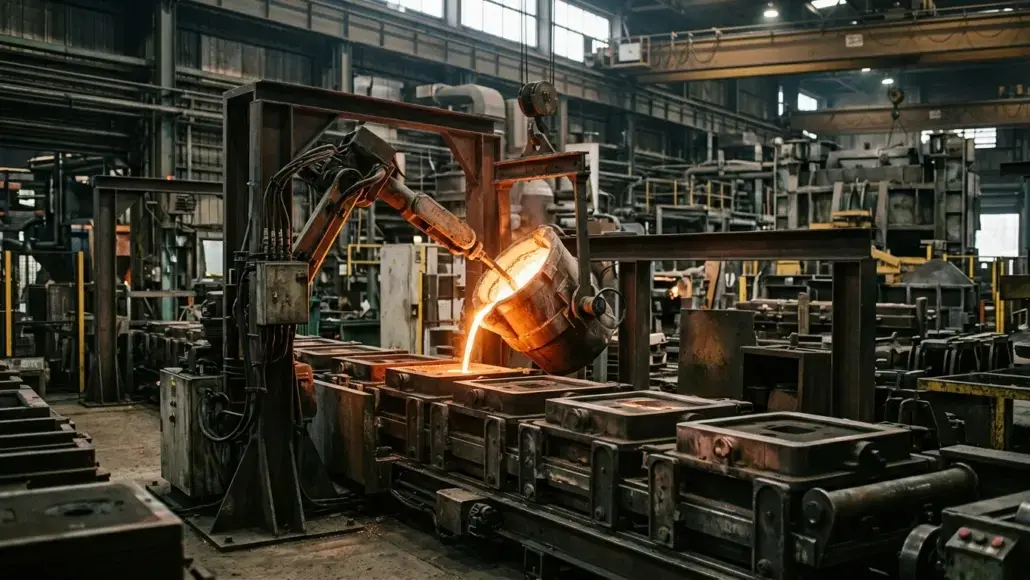
At the core of the automated foundry is the robotic arm. In the past, pouring molten copper was a manual task fraught with risk. Today, six-axis robots equipped with specialized end-of-arm tooling can handle ladles and molds with millimeter precision. The use of automation in modern copper casting plant operations allows for a perfectly controlled pour every time. Sensors monitor the temperature of the molten metal and the mold in real-time, and the robotic system adjusts the pouring speed to ensure a smooth, laminar flow. This minimizes the entrapment of air and prevents the formation of oxide inclusions, which are the primary causes of internal defects in copper castings. The result is a much higher “first-time-right” yield and a significant reduction in the amount of material that must be scrapped and remelted.
Automated Thermal Management and Solidification Control
The quality of a copper casting is largely determined by how it cools. Copper has a high thermal conductivity, but it is also prone to shrinkage and gas porosity as it solidifies. Managing this process requires a sophisticated understanding of thermodynamics. Copper casting plant automation enables the use of computer-controlled cooling systems. These systems utilize a network of thermocouples and infrared cameras to create a digital thermal map of the casting as it cools. If the system detects a “hot spot” that could lead to a shrinkage cavity, it can automatically adjust the flow of cooling water or air to that specific area. This level of granular control ensures a uniform grain structure throughout the casting, providing the mechanical strength and electrical conductivity required for high-end industrial applications.
Enhancing Occupational Safety through Remote Operation
One of the most compelling arguments for automation in the foundry is the improvement in worker safety. The environments surrounding smelting furnaces and casting lines are inherently dangerous. Heat stress, respiratory hazards from fumes, and the risk of molten metal splashes are constant concerns. By implementing copper casting plant automation, manufacturers are moving their workers away from the “red zone” and into pressurized, air-conditioned control rooms. Operators now use high-definition camera feeds and haptic feedback controllers to manage the process from a safe distance. This shift not only reduces the number of workplace accidents but also opens the industry to a more diverse workforce, including those who may not have the physical stamina for traditional foundry work but possess the technical skills to manage complex automated systems.
Integrated Quality Control and Real-Time Inspection
In an automated casting plant, quality control is no longer a separate department that checks products at the end of the line; it is an integral part of the production process. High-speed laser scanners and X-ray systems are integrated directly into the casting line. As each casting is removed from its mold, it is instantly scanned for dimensional accuracy and internal integrity. The data from these inspections is fed back into the central control system. If a trend of slight deviations is detected, the system can autonomously adjust the molding or pouring parameters to correct the issue before it leads to a rejected part. This proactive approach to quality is a hallmark of copper casting plant automation, ensuring that the plant operates at peak efficiency while maintaining the highest possible standards.
Throughput Optimization and the Smart Foundry
In the competitive global market for copper alloys, throughput—the volume of high-quality material produced per hour—is a key metric of success. Automation allows for a continuous, 24/7 production cycle that is not limited by human fatigue. Robotic systems can swap molds, clean ladles, and transport finished castings with a speed and consistency that manual crews cannot match. Furthermore, the use of industrial IoT (Internet of Things) allows the entire plant to act as a single, synchronized organism. Each piece of equipment communicates with the others, ensuring that the smelting furnace produces metal at exactly the rate the casting line can consume it. This “just-in-time” approach to metallurgy reduces energy consumption and minimizes the amount of work-in-progress inventory held on the floor.
The Role of Digital Twins in Foundry Design
Before a single drop of molten copper is poured, the entire casting process can now be simulated using digital twins. This is a critical component of copper casting plant automation. A digital twin is a virtual replica of the physical foundry that allows engineers to test different alloys, mold designs, and pouring speeds in a risk-free environment. By using computational fluid dynamics (CFD) and thermal analysis software, engineers can identify potential problems—such as turbulence in the pour or inadequate venting in the mold—long before they occur on the factory floor. This drastically reduces the time and cost associated with bringing new alloy products to market and ensures that the physical automated system is optimized for performance from day one.
Challenges in Implementing Foundry Automation
While the benefits are significant, the transition to a fully automated foundry is not without its challenges. The initial capital expenditure for robotic systems and high-tech sensors is substantial. Additionally, the environment of a casting plant is incredibly harsh on electronics and precision machinery. Robotic arms and sensors must be specifically engineered to withstand intense heat, dust, and electromagnetic interference from induction furnaces. Maintaining these systems requires a highly skilled team of mechatronics technicians and software engineers. Furthermore, there is the human challenge of managing the cultural shift within the organization. Workers must be retrained and reassured that automation is a tool for empowerment and safety, not just a means of displacement.
The Future of Copper Casting: AI and Autonomous Systems
The next frontier for automation in modern copper casting plant operations is the integration of artificial intelligence that can learn and adapt. We are moving toward “self-healing” casting lines where the AI can analyze millions of data points from past production cycles to predict and prevent failures. These systems will not only follow pre-programmed instructions but will also develop their own optimized pouring profiles based on the specific characteristics of the copper scrap being melted that day. As 5G connectivity and edge computing become more prevalent, the ability to coordinate complex robotic tasks across the foundry floor will become even more seamless. The copper foundry of the future will be a silent, efficient, and data-driven environment that pushes the boundaries of what is possible in metal fabrication.
Conclusion: Engineering the Future of Metallurgy
Mining Frontier sees copper casting plant automation as a fundamental reimagining of one of the world’s oldest industrial processes. By bridging the gap between ancient metallurgical knowledge and 21st-century digital technology, the copper industry is ensuring its relevance in a rapidly changing world. These automated systems provide the precision required for the electronics of tomorrow, the safety required for the modern workforce, and the efficiency required for a sustainable global economy. As we look forward, the continued evolution of foundry automation will be the primary driver of innovation in the copper sector, ensuring that this essential metal continues to be the backbone of our technological civilization in a safer and more efficient way than ever before.