








Mining has always been one of the world’s most demanding industries, where operational efficiency must be balanced with the safety of workers operating in complex and often hazardous environments. Despite decades of improvements in safety regulations, equipment design, and operational practices, mining companies continue to face risks associated with heavy machinery, geotechnical instability, confined spaces, hazardous gases, and unpredictable environmental conditions. As mining operations become larger, deeper, and increasingly automated, ensuring worker safety requires more than traditional monitoring and compliance measures.
This evolving landscape is driving the adoption of AI in Mine Safety, where artificial intelligence, automation, advanced sensors, and data analytics are transforming how mining companies identify hazards, manage operational risks, and respond to potential incidents. Rather than relying solely on manual inspections or reactive safety procedures, intelligent technologies enable continuous monitoring of mining environments, allowing operators to detect anomalies, predict equipment failures, and identify safety risks before they escalate into serious incidents.
The growing role of AI in Mine Safety also reflects the mining industry’s broader digital transformation. Automation, connected equipment, remote operations, and intelligent monitoring systems are increasingly working together to create safer and more efficient mining environments. By integrating real-time operational data with AI-driven decision-making, mining companies are shifting toward proactive safety strategies that improve worker protection while supporting productivity and operational resilience.
As digital technologies continue to mature, AI in Mine Safety is becoming more than a technological advancement. It is emerging as a strategic component of modern mining operations, helping the industry build safer workplaces while supporting the transition toward smarter and more sustainable mining practices.
AI Is Transforming Hazard Detection and Risk Management
Traditional mine safety has largely depended on scheduled inspections, manual observations, and predefined operational procedures to identify potential hazards. While these practices remain essential, they often detect risks only after conditions begin to deteriorate. Modern mining operations generate enormous volumes of operational data every day, creating opportunities for artificial intelligence to identify patterns that would be difficult for human operators to recognise in real time.
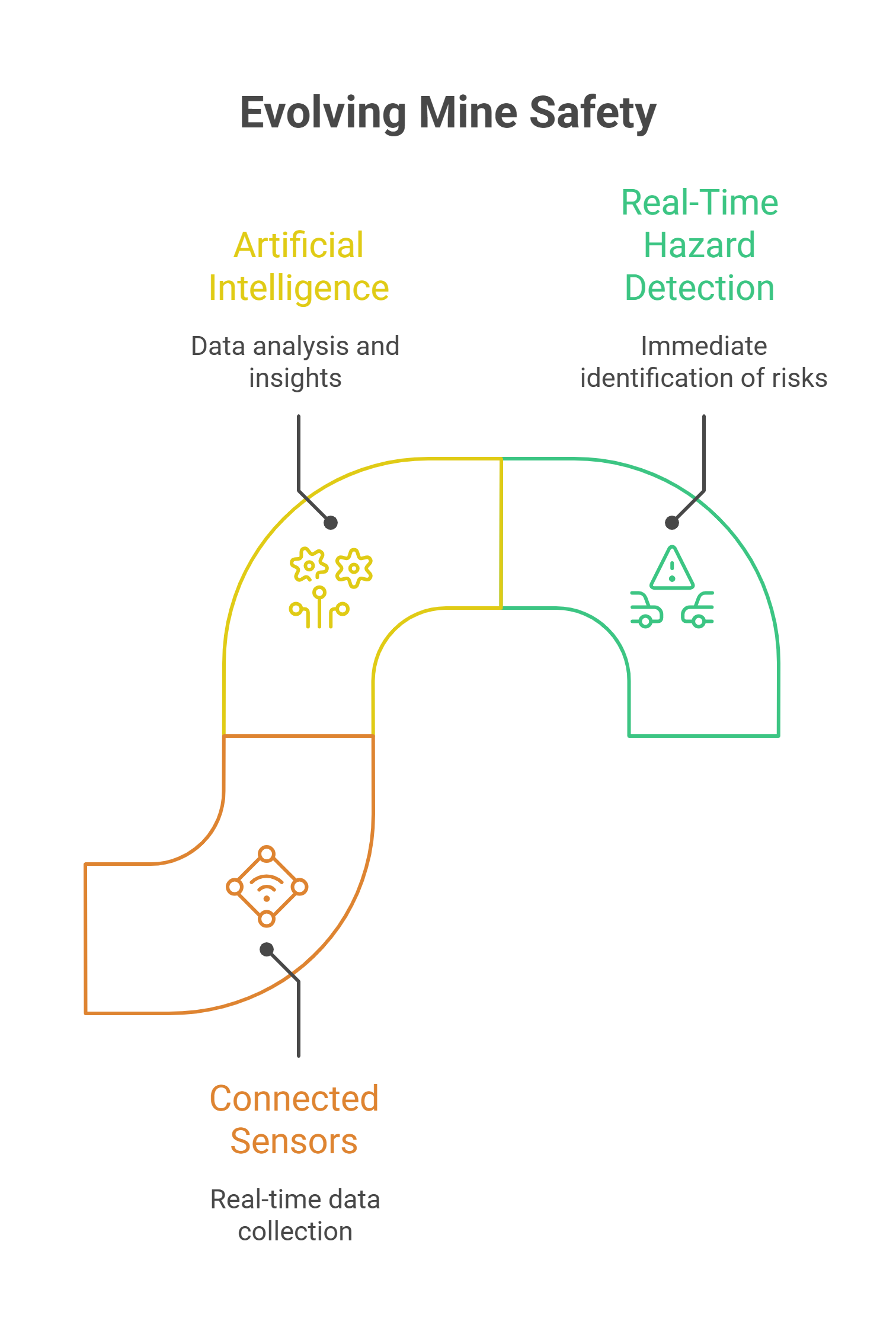
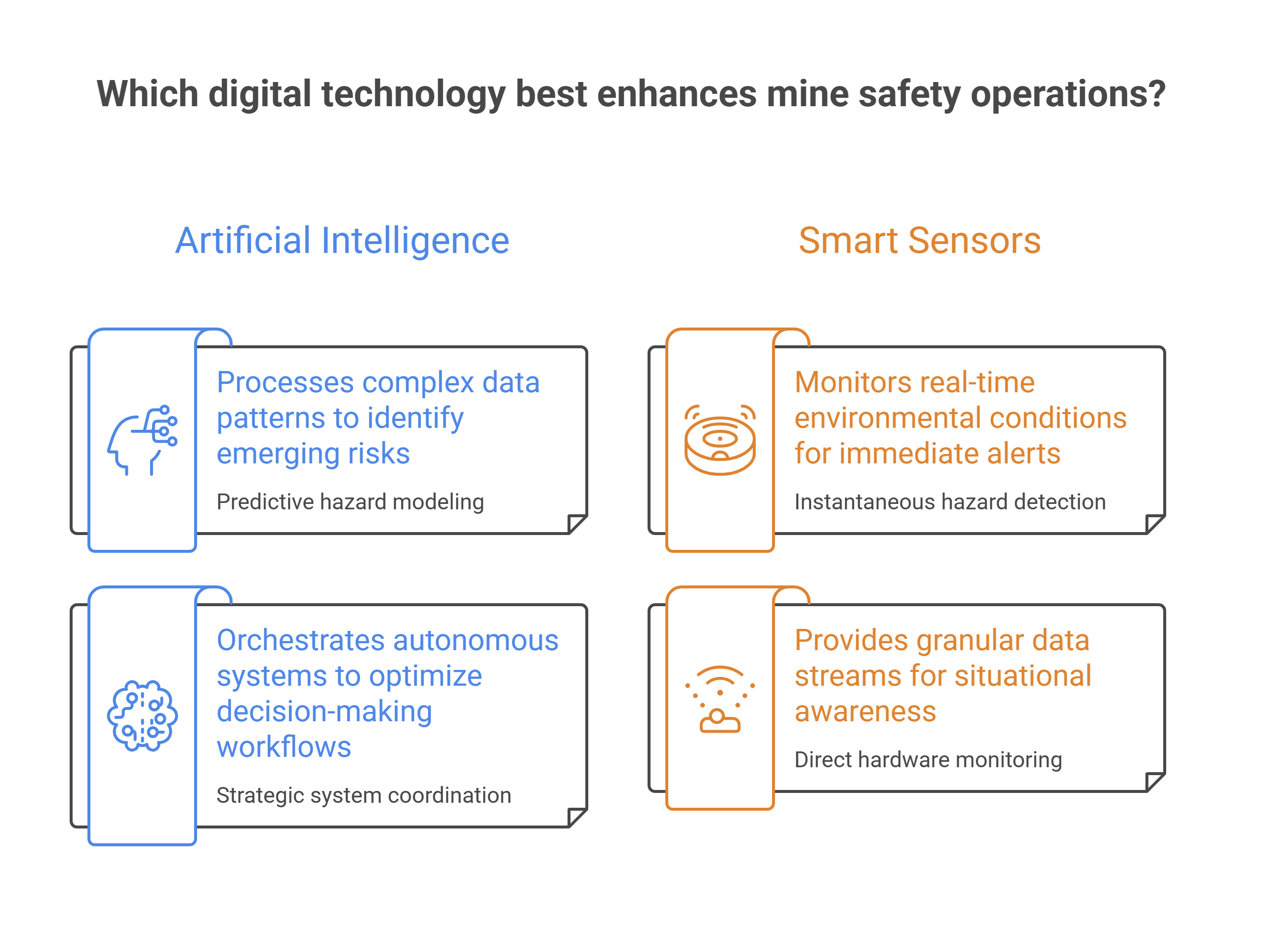
AI in Mine Safety is changing this approach by continuously analysing information collected from equipment, environmental monitoring systems, surveillance cameras, and connected sensors. Machine learning algorithms can detect abnormal operating conditions, identify potential equipment failures, monitor changes in ground stability, and recognise safety risks long before they become visible during routine inspections. This enables mining companies to shift from reactive safety management to predictive risk prevention.
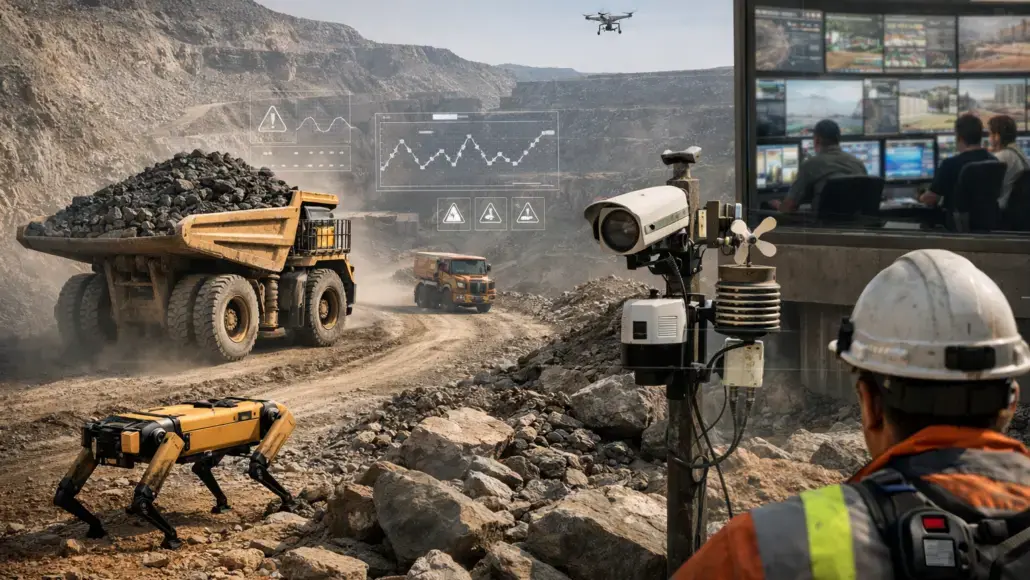
Computer vision is becoming another important component of AI in Mine Safety. AI-powered imaging systems can analyse live video feeds to detect unsafe worker behaviour, monitor the use of personal protective equipment, identify restricted-area access, and observe equipment movement across mining sites. These intelligent monitoring capabilities provide safety teams with faster situational awareness while supporting more informed operational decisions.
Rather than replacing human expertise, artificial intelligence enhances decision-making by providing safety professionals with continuous operational insights that improve both risk assessment and incident prevention.
Automation Is Reducing Worker Exposure to High-Risk Environments
Automation is fundamentally changing how hazardous mining activities are performed by reducing the need for workers to operate directly in high-risk areas. Many mining processes that once required personnel to work near heavy equipment, unstable rock formations, or confined underground environments can now be supported through autonomous or remotely operated systems.
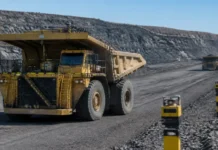
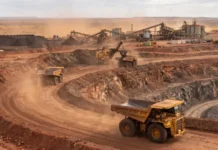
The integration of automation with AI in Mine Safety enables mining equipment to perform repetitive and potentially dangerous tasks with greater consistency while reducing human exposure to operational hazards. Autonomous haulage systems, remotely operated drilling equipment, robotic inspection technologies, and automated material handling systems are allowing mining companies to improve safety without compromising operational performance.
Remote operation centres further strengthen AI in Mine Safety by enabling operators to supervise equipment from secure control rooms rather than hazardous field locations. Advanced communication networks, real-time video monitoring, and intelligent automation allow operators to maintain visibility across mining operations while reducing the number of personnel required in high-risk environments.
As mining automation continues to evolve, the relationship between workers and technology is becoming increasingly collaborative. Rather than replacing skilled personnel, automation enables workers to focus on supervision, operational planning, maintenance, and higher-value decision-making while intelligent systems perform routine or hazardous tasks more safely and consistently.
Smart Sensors and Real-Time Monitoring Are Strengthening AI in Mine Safety
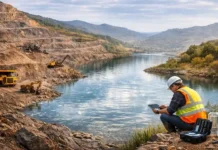
The effectiveness of AI in Mine Safety depends on the quality and availability of real-time operational data. Modern mining operations are increasingly equipped with connected sensors that continuously monitor environmental conditions, equipment performance, and workplace safety. These sensors provide a constant stream of information that enables mining companies to identify hazards earlier and respond more effectively to changing operating conditions.
Advanced monitoring systems can track air quality, gas concentrations, ground movement, temperature, humidity, dust levels, and equipment health across both surface and underground operations. When integrated with AI in Mine Safety, this data is analysed continuously to detect abnormal conditions that may indicate emerging safety risks. Instead of relying solely on scheduled inspections, intelligent monitoring systems provide mining operators with immediate visibility into conditions that require attention, allowing corrective actions to be taken before incidents occur.
Real-time monitoring also improves emergency preparedness by providing faster situational awareness during unexpected events. Whether responding to equipment malfunctions, ventilation issues, or changing geological conditions, intelligent monitoring systems enable safety teams to make more informed decisions while reducing response times. As mining operations become increasingly connected, continuous monitoring is becoming an essential component of modern mine safety strategies.
Predictive Analytics Is Enabling Proactive Safety Management
Traditional safety management often focuses on responding to incidents after they occur or identifying risks through periodic inspections. AI in Mine Safety is changing this approach by introducing predictive analytics capable of identifying potential hazards before they develop into operational problems. By analysing historical records alongside real-time operational data, artificial intelligence can recognise patterns that indicate elevated safety risks and recommend preventive action.
Predictive analytics is particularly valuable for equipment maintenance, where machine learning models can detect early signs of component wear, mechanical failure, or abnormal operating behaviour. Addressing these issues before equipment failure not only improves operational reliability but also reduces the likelihood of safety incidents associated with unexpected breakdowns.
Beyond equipment performance, AI in Mine Safety supports predictive risk assessment across broader mining operations. Intelligent models can evaluate environmental changes, operational trends, and workforce activity to identify conditions that may increase accident risks. This enables safety managers to prioritise inspections, optimise maintenance schedules, and allocate resources more effectively, supporting a proactive safety culture rather than reactive incident management.

Workforce Development Remains Central to Digital Mine Safety
Although intelligent technologies are transforming mining operations, people remain central to effective safety management. The adoption of AI in Mine Safety is changing the skills required across the industry, creating greater demand for workers capable of operating automated equipment, interpreting digital information, and managing increasingly sophisticated mining systems.
As automation expands, workforce development is becoming an essential part of successful digital transformation. Training programmes are evolving to help employees understand AI-assisted decision-making, remote operations, digital monitoring platforms, and advanced safety technologies. Equipping workers with these capabilities ensures that technological innovation strengthens, rather than replaces, human expertise.
The relationship between workers and intelligent systems is therefore becoming increasingly collaborative. While AI in Mine Safety can rapidly analyse large volumes of operational data and identify emerging risks, experienced personnel continue to play a critical role in interpreting results, making operational decisions, and responding to complex situations that require professional judgement. Combining digital technologies with skilled workers creates a more balanced and resilient approach to mine safety.
Challenges Shaping the Future of AI in Mine Safety
The continued expansion of AI in Mine Safety presents significant opportunities, but its successful implementation also depends on overcoming several operational and technological challenges. Many mining operations still rely on legacy equipment and fragmented data systems, making the integration of advanced digital technologies more complex than simply introducing new software or connected devices.
Infrastructure investment remains another important consideration. Reliable communication networks, cloud computing resources, edge processing capabilities, and secure digital platforms are all necessary to support large-scale AI in Mine Safety deployments. Without this foundation, intelligent monitoring systems cannot consistently deliver the real-time insights required for predictive safety management.
Cybersecurity and data governance are becoming increasingly important as mining operations generate larger volumes of connected operational data. Protecting critical infrastructure while ensuring data accuracy and system reliability will remain essential as artificial intelligence becomes more deeply integrated into safety operations. In addition, achieving interoperability between equipment, sensors, and digital platforms will require continued collaboration across the mining technology ecosystem.
Addressing these challenges will help ensure that AI in Mine Safety continues to evolve as a practical and scalable solution capable of supporting safer, smarter, and more resilient mining operations.
Conclusion
The future of mining safety is increasingly being shaped by intelligent technologies that enable faster decision-making, greater operational visibility, and more proactive risk management. AI in Mine Safety is moving beyond isolated technology deployments to become an integral part of modern mining operations, supporting continuous hazard detection, predictive analytics, intelligent automation, and real-time monitoring across increasingly complex environments.
As digital transformation accelerates throughout the mining industry, the integration of automation, connected sensors, and artificial intelligence is helping create safer workplaces while improving operational efficiency and resilience. Although infrastructure, interoperability, workforce development, and cybersecurity remain important considerations, the continued advancement of AI in Mine Safety reflects a broader shift toward data-driven safety strategies that are redefining how mining companies protect workers and manage operational risk.