













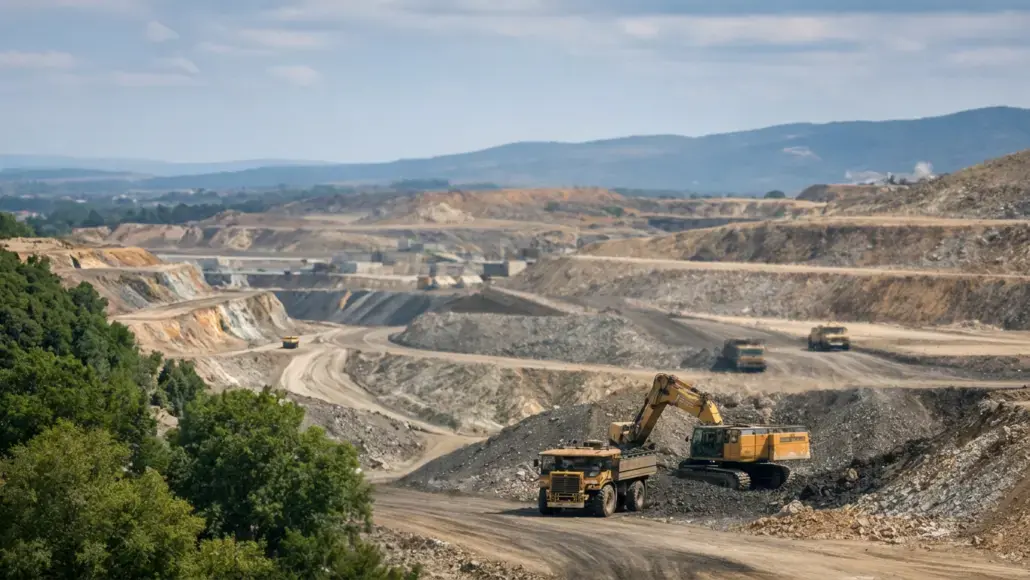

The US House of Representatives has passed legislation that would permanently make mining and mineral processing eligible for accelerated federal permitting under the FAST-41 framework. The Protecting Domestic Mining Act, designated as H.R. 1501, was introduced in February 2025 and would formally add mining and mineral processing to the list of sectors that can become covered projects under the FAST-41 program. This move represents a significant legislative effort to codify mining project permitting eligibility that currently exists only through regulation.
House Passage and FAST-41 Eligibility
FAST-41 was originally established under the Fixing America’s Surface Transportation Act in 2015 as a coordinated federal permitting process for major infrastructure projects. The program is designed to deliver greater interagency coordination, more predictable permitting timelines, and increased transparency throughout the federal permitting process.
While mining is already treated as an eligible sector under existing FAST-41 regulations, the passage of H.R. 1501 through the House would codify that eligibility directly in federal law. By embedding mining project permitting eligibility into the statute itself, the legislation would make it substantially more difficult for any future administration to reverse the policy through regulatory action alone. The bill’s scope extends beyond critical minerals such as lithium, rare earths, antimony, and tungsten. Mining and mineral processing projects involving a wider range of commodities could potentially seek coverage under the FAST-41 framework if the legislation becomes law.
What the Legislation Would Change
H.R. 1501 would effectively overturn a Biden-era proposal that sought to limit FAST-41 eligibility in the mining sector to projects involving the mining, processing, or recycling of certain specific minerals. That proposal, however, was never finalised. Under the legislation, the Federal Permitting Improvement Steering Council would be prohibited from administering or enforcing the proposed rule, and mining and mineral processing would instead be explicitly written into the FAST Act itself.
The broader eligibility provisions mean that mining project permitting under the accelerated federal permitting framework would not be restricted to commodities on the US critical minerals list. This represents a wider approach to mining legislation and permitting reform than previous proposals that focused narrowly on strategic minerals.
The legislation aligns with ongoing efforts by the current administration to strengthen domestic mineral supply chains and reduce delays in developing new mines and mineral processing facilities. Federal permitting reform has been central to that strategy, as lengthy approval timelines have historically added years to the development of mining projects across the country.
Next Legislative Steps and Industry Context
Despite passing the House, H.R. 1501 still needs to clear the Senate and receive presidential signature before it can become law. The bill is not yet enacted, and its path through the Senate remains to be determined.
The legislation has not advanced without opposition. Arizona Congresswoman Adelita Grijalva spoke against H.R. 1501 on the House floor, raising environmental concerns about the potential impacts of accelerating mine approvals. Grijalva proposed an amendment that would have required robust, meaningful, and enforceable consultation with potentially affected Tribal Nations before a mining project could become eligible for expedited federal permitting under FAST-41. Her amendment highlighted ongoing debates about balancing the acceleration of mining legislation with environmental protections and community engagement.
The outcome in the Senate will determine whether the codification of mineral processing and mining eligibility under the FAST-41 framework moves from legislative proposal to federal law, shaping the future landscape of mining permitting across the United States.