







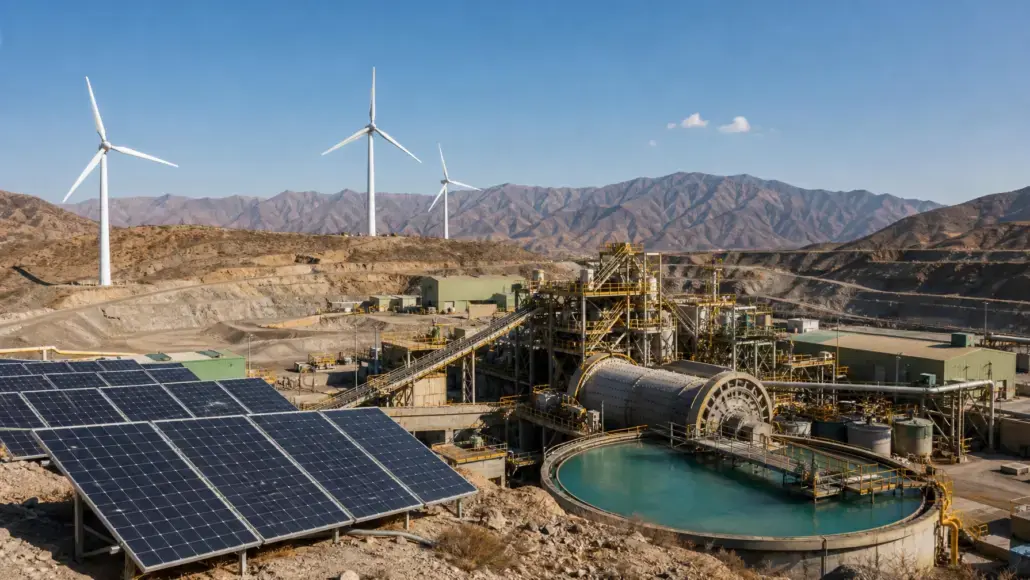

The mining and mineral processing sector is currently navigating one of its most significant transformations in history. As the world moves toward a low-carbon economy, the industry is increasingly turning to renewable energy integration in mineral processing as a primary tool for decarbonization and cost management. Traditionally, mineral processing plants have been high-intensity energy consumers, often located in remote areas far from centralized power grids. This geographic isolation has historically forced operations to rely on expensive and carbon-intensive diesel or gas-fired generation. However, the falling costs of wind and solar technology, combined with advancements in energy storage, are now making renewable energy in mining the most logical and economically sound choice for modern operators. This shift is not just about environmental responsibility it is a fundamental pillar of operational resilience and long-term financial stability in an era of energy volatility.
The Strategic Shift to Renewable Energy in Mining
The move toward renewable energy integration is driven by a convergence of technological maturity and economic necessity. For many years, renewable energy was seen as a supplementary power source useful for reducing fuel consumption but not capable of providing the reliable, baseload power required by a 24/7 processing plant. This perception is rapidly changing. Today, sophisticated microgrids that combine solar energy in mining with wind power and large-scale battery storage are proving that high-penetration renewable systems can indeed power heavy industrial loads. These systems are now capable of providing the stable voltage and frequency control essential for the sensitive electric motors and control systems found in modern mineral processing facilities.
The economic benefits are equally compelling. While the upfront capital expenditure for a solar farm or a wind array is significant, the operational costs are virtually zero. In contrast, the cost of diesel power is subject to global fuel price fluctuations and the logistical costs of transport to remote sites. By integrating renewable power for mineral processing, companies can lock in low, predictable energy costs for the life of the mine. This level of cost certainty is a major advantage in an industry characterized by cyclical commodity prices. Furthermore, the ability to generate power on-site reduces the dependence on external infrastructure, protecting operations from grid outages or regional energy shortages.
Harnessing Solar Energy in Mining Operations
Solar energy in mining has become the most widely adopted form of renewable integration due to its modularity and the abundance of solar resources in many of the world’s major mining jurisdictions, such as Australia, Chile, and sub-Saharan Africa. Large-scale photovoltaic (PV) arrays can be deployed relatively quickly on rehabilitated mine land or near processing facilities. These systems are particularly effective for offsetting the peak daytime energy demands of mineral processing, such as comminution and flotation. When paired with advanced tracking systems, solar arrays can maximize their output throughout the day, providing a steady stream of low-cost energy that directly displaces expensive fossil fuel generation.
In addition to traditional PV, concentrated solar power (CSP) is also being explored for its ability to provide thermal energy. Many mineral processing stages, such as leaching or drying, require significant heat. CSP can capture and store solar energy as heat, which can then be used directly in these processes or converted to electricity via steam turbines. This thermal storage capability is a unique advantage of CSP, allowing it to continue providing power or heat even after the sun has set. As these technologies mature, the integration of both PV and CSP will create a robust and versatile energy profile for sustainable mineral processing facilities.
Wind Power for Mining Operations in Diverse Climates
While solar is dominant in desert regions, wind power for mining operations is proving to be a critical asset in coastal, mountainous, or high-latitude areas. Modern wind turbines are highly efficient and can be scaled to meet the massive power demands of a large-scale processing plant. The advantage of wind is its ability to generate power around the clock, often complementing solar generation which peaks during the day. In many locations, the wind profile is strongest during the night, providing a natural balance to the solar cycle. This synergy reduces the requirement for large-scale energy storage, further improving the economics of the mining energy transition.
The installation of wind turbines at mine sites does present unique logistical challenges, particularly the transportation of large blades and tower sections to remote areas. However, the industry is developing innovative solutions, such as modular blade designs and on-site assembly techniques, to overcome these hurdles. By incorporating wind into the energy mix, mineral processing plants can achieve much higher levels of renewable penetration, moving closer to the goal of 100% renewable power for mineral processing. The combination of wind, solar, and storage creates a resilient “virtual power plant” that can adapt to changing weather patterns and operational needs.
Overcoming Challenges in Renewable Energy Integration
The primary technical challenge of renewable energy integration in mineral processing is intermittency. Mineral processing is a continuous process a sudden drop in power can cause significant operational issues, from clogged pipes to equipment damage. To address this, the industry is investing heavily in Battery Energy Storage Systems (BESS) and other forms of long-duration storage. These systems act as a buffer, smoothing out the fluctuations in wind and solar output and providing instantaneous power during transitions between energy sources. Advanced microgrid controllers use AI and machine learning to predict weather changes and adjust the energy mix in real-time, ensuring that the processing plant always has the stable power it needs.
Another challenge is the integration of renewable energy with legacy equipment. Many older processing plants were designed for stable, centralized power and may require upgrades to their electrical infrastructure to handle the bidirectional flow of energy and the variability of a microgrid. This is why the mining energy transition is often paired with a broader program of plant electrification and digital transformation. By modernizing the plant’s electrical heart, operators can unlock the full benefits of renewable integration, creating a more flexible and efficient production environment.
The Role of Microgrids in Sustainable Mineral Processing
The development of sophisticated microgrids is the cornerstone of successful renewable integration. A microgrid is a localized energy system that can operate independently or in conjunction with the main grid. In the context of mineral processing, a microgrid manages the complex interactions between solar arrays, wind turbines, battery storage, and back-up diesel generators. The goal is to maximize the use of “free” renewable energy while maintaining the 99.9% reliability required for industrial operations. These systems are increasingly becoming standard for new mine developments, representing the cutting edge of sustainable mineral processing technology.
Beyond reliability, microgrids also offer opportunities for energy trading. In regions where the mine is connected to a national grid, the microgrid can export excess renewable power during periods of low site demand, creating an additional revenue stream. Conversely, the microgrid can import power from the grid when it is cheap or when renewable generation is low. This bidirectional relationship turns the mineral processing plant from a passive consumer into an active participant in the energy market, further enhancing its economic performance.
Long-Duration Storage and the Future of the Energy Mix
As mines aim for higher renewable penetration often targeting 80% to 100% the limitations of traditional lithium-ion batteries become apparent. For these high-penetration scenarios, long-duration energy storage (LDES) technologies are essential. Options such as pumped hydro, compressed air energy storage, and flow batteries can store large amounts of energy for days or even weeks. While these technologies are currently more expensive or location-dependent, they are critical for ensuring that a processing plant can continue to operate during extended periods of low wind or cloud cover.
The exploration of green hydrogen as a storage medium is also gaining momentum. Excess renewable energy can be used to produce hydrogen through electrolysis, which can then be stored and used in fuel cells to generate electricity when needed. Hydrogen also has the potential to replace fossil fuels in high-temperature processing stages that are difficult to electrify. By integrating hydrogen into the energy mix, mining companies can create a truly circular and carbon-free energy system, setting a new benchmark for renewable power for mineral processing.
Environmental and Social Impacts of the Mining Energy Transition
The shift to renewable energy is not just a technical or economic matter it has profound environmental and social implications. By reducing their reliance on fossil fuels, mining companies can significantly lower their Scope 1 and Scope 2 emissions, contributing to global climate goals. This is increasingly important for securing the “social license to operate” from local communities and government regulators. A mine that is powered by clean energy is seen as a more responsible neighbor, reducing the environmental footprint of the operation and preserving local air and water quality.
Furthermore, the transition to renewable energy can create new economic opportunities in mining regions. The construction and maintenance of solar and wind farms require a skilled workforce, often providing long-term employment that persists even after the mine has closed. By investing in local renewable infrastructure, mining companies can leave a positive, lasting legacy that benefits the community for decades. This social dimension of the mining energy transition is essential for building a sustainable and inclusive industry.
In conclusion, renewable energy integration in mineral processing is no longer a luxury or a niche experiment it is a strategic imperative for the modern mining industry. By harnessing solar energy in mining and wind power for mining operations, and by investing in advanced microgrids and storage, companies can build a foundation of sustainable mineral processing that is both economically resilient and environmentally responsible. The journey toward a renewable-powered future is complex, but the path is clear. Those operations that lead the way in the mining energy transition will be the ones that thrive in the low-carbon economy, providing the essential materials for a sustainable world at the lowest possible cost and with the highest standards of stewardship.