


















Contractors are an established part of modern mining operations, supporting activities ranging from maintenance and construction to specialist engineering and production services. For Mining Frontier, contractor safety is increasingly relevant to post-incident risk management because serious events can expose weaknesses not only within a contractor’s work practices, but also across the interfaces between contractors, mine operators and wider site systems.
Recent ICMM data shows the scale of that interface. In 2024, contractors accounted for 19 of 42 fatalities reported by ICMM member companies, representing 45% of recorded fatalities while contractors performed 58% of recorded working hours. The figures relate to ICMM members rather than the global mining industry as a whole, but they demonstrate why contractor arrangements remain significant within mine risk management.
Contractor Risk Becoming More Visible Through Incident Investigation
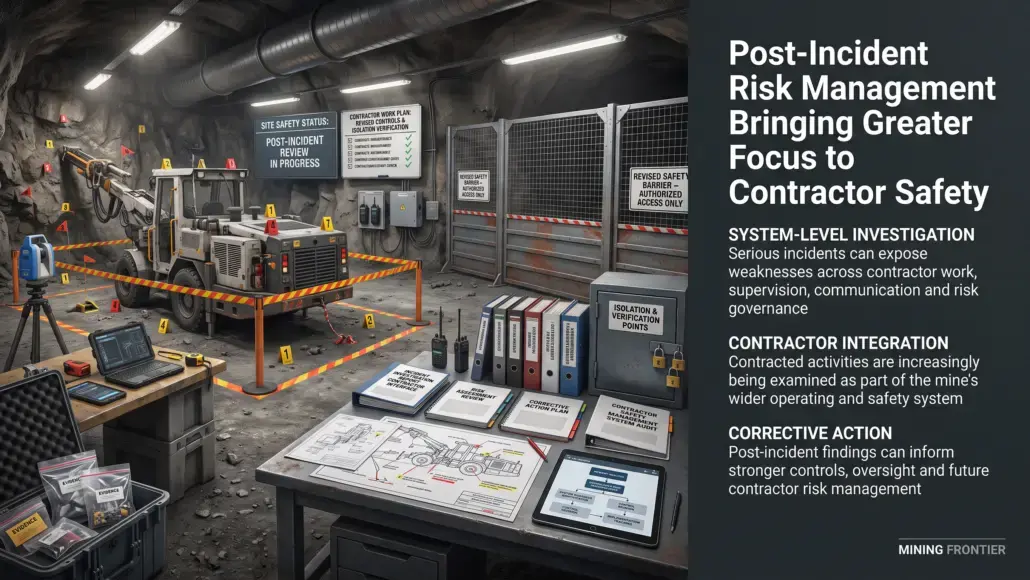
The post-incident process is also widening the focus from individual actions toward the systems surrounding contracted work. The International Labour Organization’s mining safety framework calls for coordination between employers operating at the same mine, while its contractor guidance covers risk assessment, communication, supervision, monitoring and alignment with the mine’s occupational safety system. This places contractor safety within the wider operating environment rather than treating contractor activities as a separate responsibility.
Regulatory investigations provide practical evidence of this approach. A 2025 investigation into an underground mine fire in Australia identified systemic weaknesses involving contractor management, hazard awareness, procedural compliance and risk governance, with recommendations covering contractor engagement, oversight and broader risk-management arrangements. Such findings show how serious incidents can prompt reviews that extend beyond the immediate event to the systems governing contracted work.
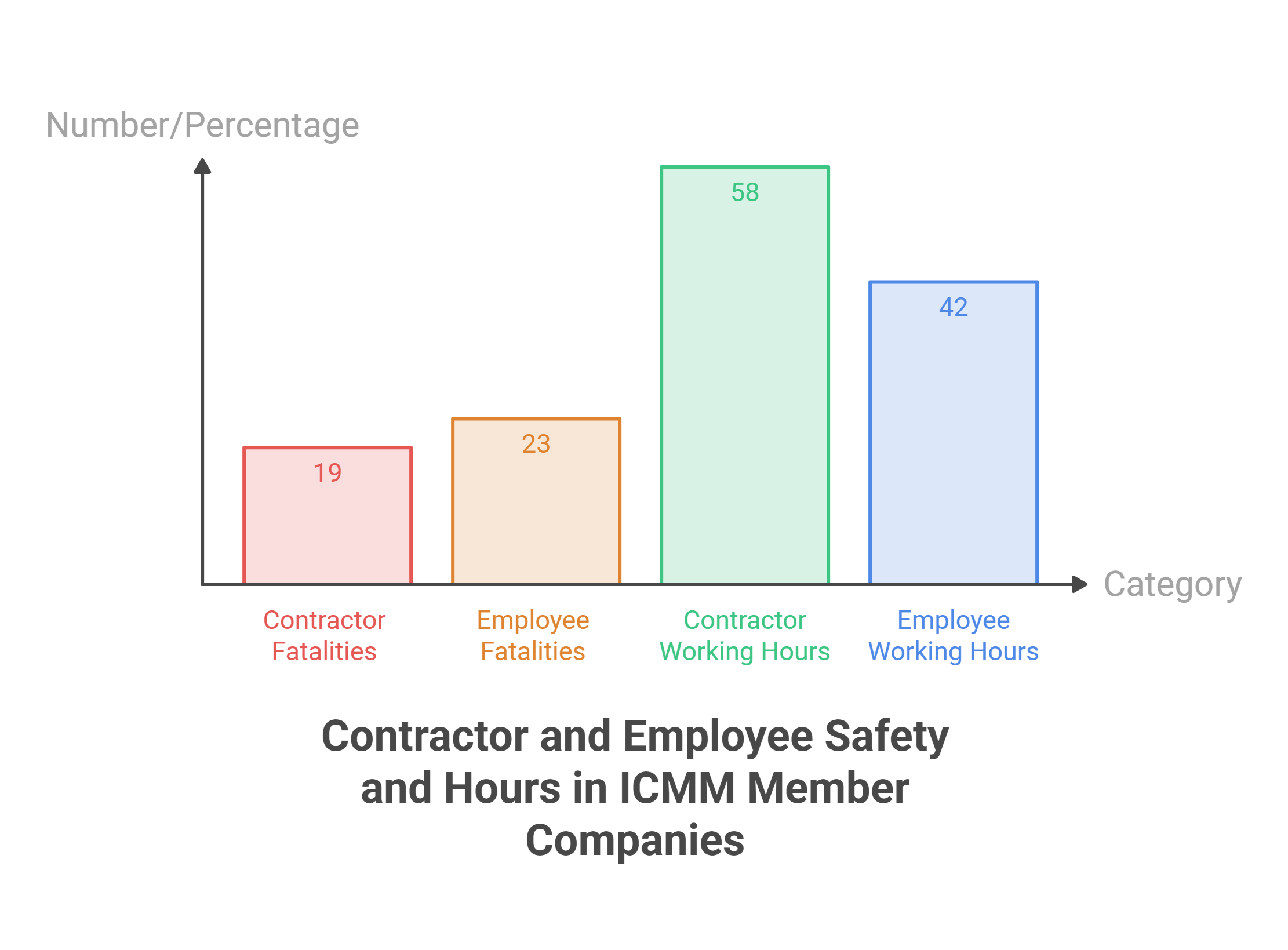
Key Takeaway: Contractor involvement represents a significant part of the mining workforce and fatality picture, reinforcing the need to integrate contracted work into wider mine risk-management systems.
Incident Investigations Expanding the Focus Beyond Immediate Causes
Serious mining incidents are increasingly being examined through the systems surrounding contracted work, rather than only through the actions that immediately preceded an event. Investigations can examine how hazards were assessed, how work was planned, whether information reached the relevant teams, and whether supervision and site controls matched the activity being performed. This broader approach places contractor safety within the mine’s overall operating system.
The International Labour Organization’s mining guidance calls for coordination between employers working at the same mine, including arrangements covering risk assessment, communication, training, supervision, incident reporting and monitoring. This is particularly relevant where contractors work alongside employees or operate specialist activities that interact with existing mine processes. In such environments, contractor safety depends partly on how effectively responsibilities and information are shared across organisational boundaries.
Post-Incident Findings Strengthening Contractor Risk Controls
A 2025 investigation into an underground mine fire demonstrated how these interfaces can become visible after an incident. The investigation identified weaknesses involving contractor management, hazard awareness, procedural compliance and risk governance. Its recommendations included strengthening contractor engagement and oversight alongside wider changes to risk-management and emergency arrangements. The example illustrates how contractor safety can become part of a broader corrective-action process rather than being treated as an isolated contractor issue.
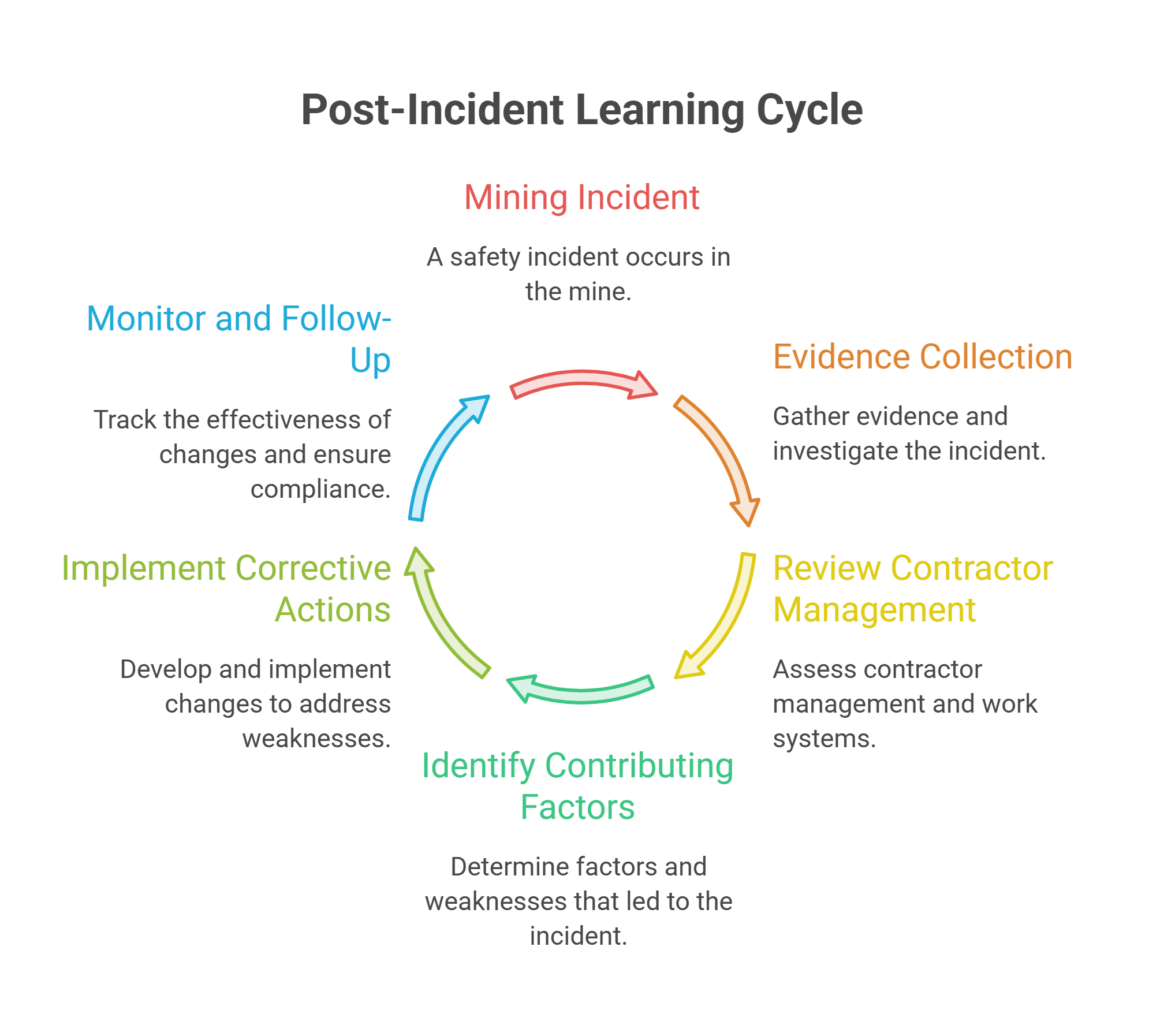
Key Takeaway: Post-incident investigation can connect findings about contracted work with changes to supervision, coordination, risk controls and wider mine safety systems.
Post-Incident Learning Strengthening Contractor Risk Management
Post-incident reviews can provide a structured way to strengthen contractor safety by connecting what happened during an event with weaknesses in planning, coordination, supervision and risk controls. The value of this process depends on whether findings are translated into specific actions, assigned to accountable parties and followed through after corrective measures are introduced.
The broader development is a move toward treating contractor activities as part of the mine’s overall risk environment rather than as a separate safety function. This requires clearer communication between operators and contractors, consistent oversight of changing work conditions and greater attention to how lessons from serious incidents are incorporated into future work.
For Mining Frontier, this places post-incident risk management within a wider safety cycle in which investigation findings can influence operational controls and contractor arrangements, while also connecting with emerging occupational exposure risks.