











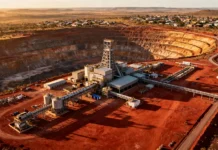
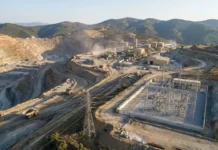
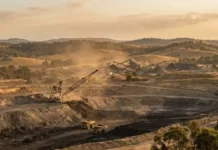
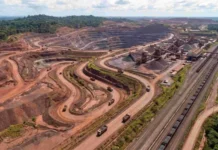
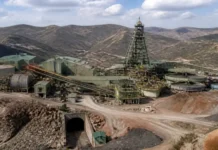
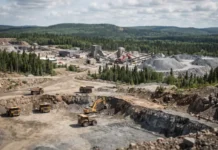
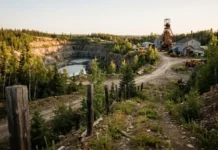

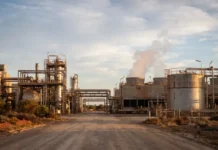
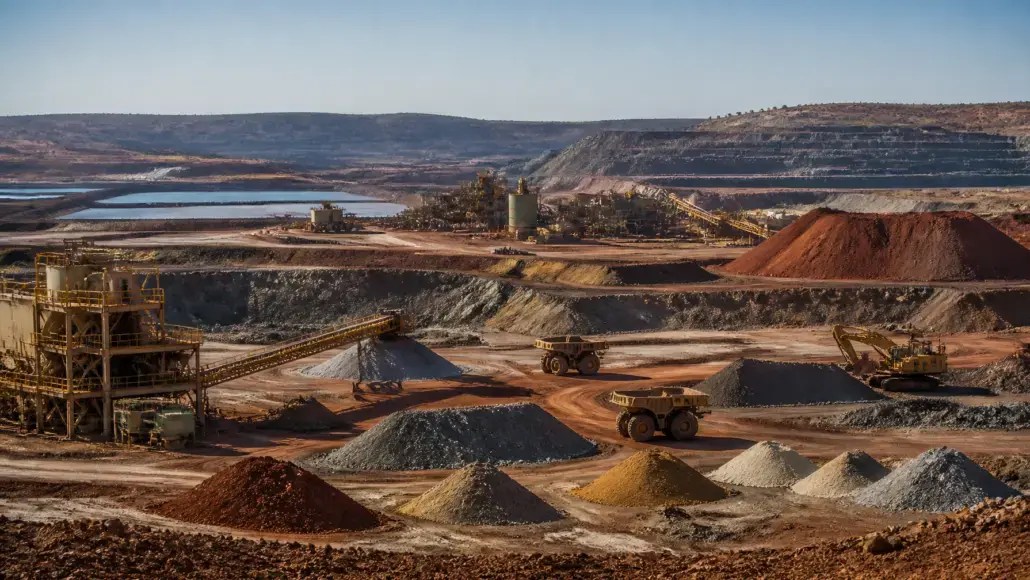

The value of Northern Territory mineral production has surged to a record A$6.08 billion in 2025/26, representing a 39.6 per cent increase on the previous year. The result comfortably surpasses the previous record of A$4.93 billion set in 2018/19, underlining the growing scale and diversity of Northern Territory mining activity.
Strong performances across gold mining and manganese mining were the primary drivers behind the record figure, while steady output from bauxite production and zinc-lead operations provided further support to the Territory’s overall mining production.
Gold and Manganese Drive Record Northern Territory Mineral Production
Gold was the single largest contributor to Northern Territory mineral production during the year. Production rose to 13.36 tonnes, and the total value of gold sold climbed 60 per cent to reach A$2.665 billion. The sharp increase in gold mining revenue reflects both higher output and favourable pricing conditions across the sector.
Manganese mining delivered an equally significant boost. Production surged 174 per cent to 5.05 million tonnes as South32’s GEMCO operation on Groote Eylandt returned to normal production levels following the disruption caused by Cyclone Megan in 2024. The recovery at GEMCO was a key factor behind the dramatic rise in manganese volumes across the Territory.
Together, gold and manganese accounted for the bulk of the growth that lifted Northern Territory mineral production to its new record.
Broader Commodity Output Supports Northern Territory Mining Sector
Beyond gold mining and manganese mining, the Territory’s other commodities continued to contribute meaningfully. Bauxite production increased to 13.2 million tonnes from 12.9 million tonnes in the prior year, with sales valued at A$918 million. Zinc-lead production remained steady at 638,000 tonnes, generating sales worth A$897 million.
The Territory’s emerging lithium industry also returned to activity during the year. Core Lithium resumed mining at its Finniss operations in May 2026, including restarting production at the Grants open pit. The restart marks a renewed step forward for critical minerals activity in the region.
The resources sector now sustains more than 6,000 direct jobs across exploration, extraction, processing and production. A further 7,875 jobs are supported across the broader Territory economy, reinforcing the sector’s importance as an employer and economic driver.
The record mining production result is also expected to increase royalty revenue available to the Northern Territory Government, with the figure exceeding the A$445 million in royalties forecast for 2026/27.
Northern Territory Mining and Energy Minister Gerard Maley said the resources sector was generating benefits across the Territory. “We are backing our resources sector because when it grows, opportunities flow right across the Territory — from regional communities through to local businesses and our service and supply chains,” Maley said in a statement.
He added that the industry was delivering across gold, manganese, bauxite, zinc, lead and emerging critical minerals, with stronger royalties from the record revenue result expected to provide greater funding for essential services including schools, roads and health.
The breadth of Northern Territory mineral production across multiple commodities continues to position the region as a significant contributor to Australian mining output.