


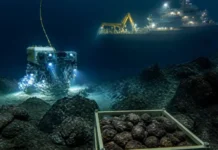





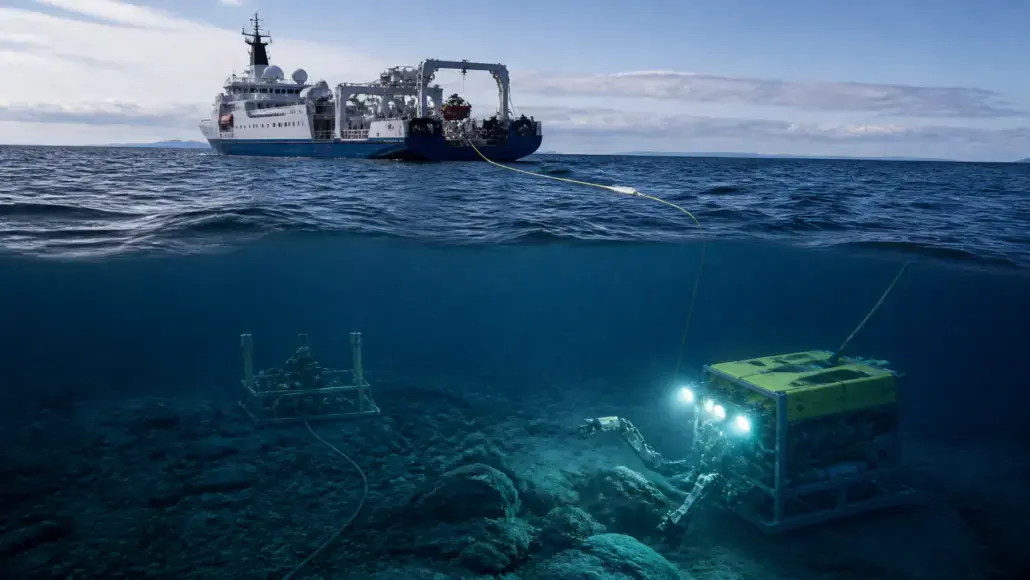

The United States and Japan are moving forward with plans for a rare earth mining project targeting deep sea rare earths buried beneath the Pacific Ocean near the remote Japanese island of Minamitorishima. The deposits sit around six kilometres below the ocean surface, making them some of the deepest ever considered for extraction.
When President Donald Trump met Japanese Prime Minister Sanae Takaichi at the White House in March, the two leaders signed a memorandum of understanding for deep sea mining cooperation. A joint US-Japan statement said the deposits near Minamitorishima could “meet centuries’ worth of industrial demand.” Despite widespread scepticism about the feasibility of seabed mining at such depths, concrete steps are now being taken to advance the rare earth mining project toward a critical testing phase.
US-Japan Plans Move Toward Mining Test
Japan’s Cabinet Office recently reported back results from test samples retrieved earlier this year by Japanese survey ships. A full-scale mining test lasting one month is planned for February 2027. That test will include refining and smelting, with an aim to complete an assessment of whether commercially produced rare earths can be developed in Japan within a year of the trial.
A handful of North American companies have expressed interest in the project. Houston-based Deep Reach Technology, an offshore engineering consultancy, has held initial meetings with Japanese officials, according to Jim Wodehouse, vice president of projects at the company. Deep Reach already works on a separate project related to polymetallic nodule extraction in the Minamitorishima exclusive economic zone and holds patents in both the US and Japan for technologies that could be used in seabed mining. Those conversations remain at a very early stage.
“I’m positive about research in the Minamitorishima EEZ,” Wodehouse said. “The rare earths are very rich and include important heavy elements, as well as having low levels of radioactivity.”
Heavy Rare Earths Found in Test Samples
The test samples showed significant levels of heavy rare earths including yttrium, gadolinium and dysprosium. These critical minerals are among the most tightly controlled by China, which supplies around 90 per cent of rare earths globally. Exports from China to Japan of dysprosium and terbium have been at zero all year.
Researchers from the University of Tokyo estimated in 2018 that mud on the seabed south of Minamitorishima contained more than 16 million tons of rare earth minerals. Deposits of yttrium alone were estimated to be sufficient to meet 780 years of global demand. An additional advantage is that samples from the site were not found to have significant levels of radiation, unlike many land-based heavy rare earth deposits, making them potentially easier to process.
More test drilling is planned as Japan works toward developing a fuller project plan. The rare earth mining project has become a priority for Takaichi, who has pushed the initiative since her time as Japan’s economic security minister. Her long-term growth strategy anticipates around $5.7 billion in public and private sector funding by 2040 for deep sea resource development including this project.
Commercialisation Still Faces Major Challenges
Despite progress, the commercial future of the rare earth mining project remains uncertain. Offshore oil drilling projects to date only reach around half the depth of the Minamitorishima seabed. Water pressure at the site is around 600 times greater than at sea level. If successful, the project would likely require billions of dollars of investment over more than a decade to produce rare earths at around three times the cost of land-based extraction in China, according to one private sector estimate.
There is no consensus yet on an effective extraction method for deep sea rare earths, though University of Tokyo professor Kentaro Nakamura said test extractions have shown the depth is not an insurmountable obstacle. “There aren’t any major technical obstacles,” Nakamura said. “It’s just about political will and the challenge from China.”
Some Japanese government officials privately acknowledge there is no prospect of the project becoming operational during the remainder of the Trump presidency, raising questions about sustained US backing. The seabed mining venture remains a long-term endeavour with no guarantee of commercial viability.