




Argentina and South Korea have agreed to deepen cooperation across the lithium value chain as part of a broader critical minerals partnership announced during the South Korean president’s visit to Buenos Aires. The memorandum of understanding positions lithium exploration, extraction, processing and refinement at the heart of a new economic framework between the two nations.
Under the terms of the critical minerals partnership, both governments will promote investment and joint projects spanning the full lithium value chain. They will also exchange information on mineral policies and investment frameworks, establishing a more structured channel for cooperation between government agencies and private-sector companies on both sides.
The agreement reflects Argentina’s ambition to draw foreign capital into its export-oriented mining sector, while South Korea seeks to secure reliable supplies of minerals essential for batteries, electric vehicles, semiconductors and energy-storage systems. Argentina holds substantial lithium resources concentrated in the northwestern provinces of Salta, Jujuy and Catamarca, making it a strategically important partner for Asian manufacturers looking to strengthen their supply chains.
Major Lithium Investment Approved in Salta
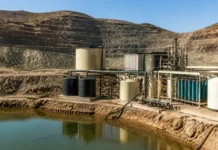
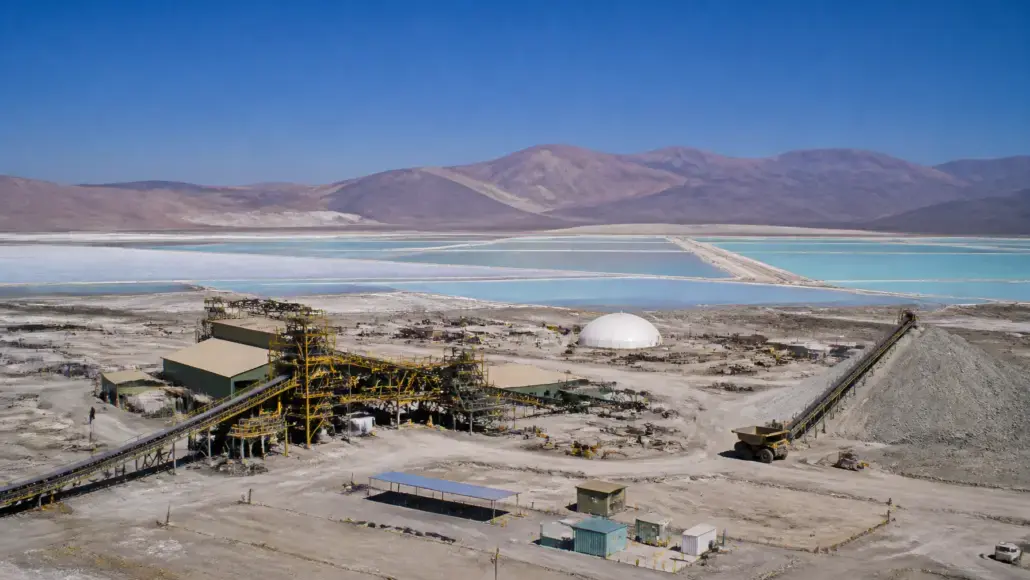
An immediate signal of the critical minerals partnership’s commercial significance came when Argentina approved an expansion of South Korean company POSCO’s lithium project in the Salta province. The investment, valued at US$547 million, is expected to support annual production of 23,000 tonnes of lithium carbonate and generate more than US$300 million in yearly exports, according to Argentina’s Economy Ministry.
The approval underscores how quickly the critical minerals partnership is translating into tangible industrial outcomes. POSCO’s expanded operations in Salta are set to become one of the most significant lithium investment projects backed by South Korean capital in Latin America, reinforcing Argentina’s position as a growing force in the global lithium value chain.
Broader Economic Cooperation on the Horizon
Beyond lithium exploration and production, the two governments have finalised negotiations on a double-taxation avoidance agreement. Once signed and ratified, the treaty is expected to reduce tax uncertainty for Korean companies operating in Argentina and create more predictable investment conditions across the mining sector and other industries.
Officials indicated that cooperation under the critical minerals partnership may eventually extend beyond lithium to encompass copper, crude oil, liquefied natural gas and nuclear energy. Discussions over a potential trade framework linking South Korea with the Mercosur bloc were also referenced during the visit, suggesting that the bilateral relationship could broaden considerably in the coming years.
For Argentina, the initiative strengthens a national strategy aimed at converting its considerable mineral resources into hard-currency earnings through downstream processing and export growth. For South Korea, the critical minerals partnership offers a pathway toward more diversified supply chains and deeper access to one of the world’s most significant lithium regions.
The lithium value chain cooperation outlined in the memorandum of understanding covers every stage from early-stage lithium exploration through to refined product output, reflecting the comprehensive scope of the agreement. Both countries have signalled their intention to move swiftly from framework commitments to concrete project development, with the POSCO expansion serving as the first major milestone under the new partnership.
The next steps include formal signing and ratification of the double-taxation treaty and continued engagement between Argentine and South Korean officials on expanding the scope of the critical minerals partnership into additional resource sectors.