






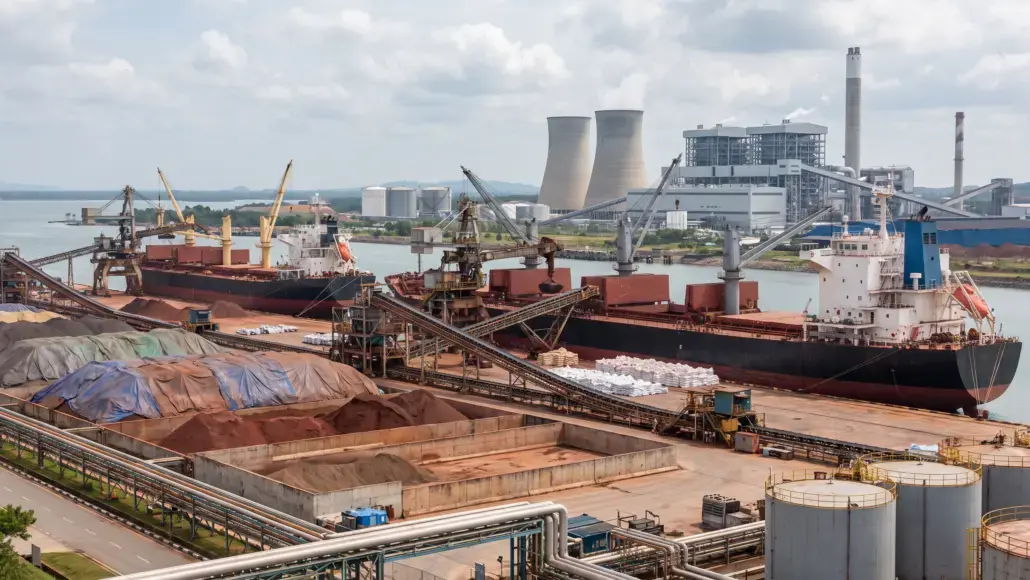

Indonesia has resumed exports of minerals that may contain rare earth elements as byproducts, the president’s office announced, following widespread complaints from the metals industry about shipment delays caused by compulsory rare earth content inspections. The decision brings relief to exporters of bauxite, alumina, copper cathodes and nickel derivatives, which had faced growing disruptions under a mandatory testing programme.
Presidential Chief of Staff Dudung Abdurachman clarified during a press conference that the ban on rare earth exports applies only to primary rare earth products. “Exporting rare earth elements as a primary product is indeed prohibited. It does not automatically apply to REE content found as accompanying or byproduct elements in primary and derivative mining products,” he said.
The announcement serves as a transitional guideline for exporters, surveyors and customs and excise authorities while the government prepares more comprehensive regulations addressing Indonesia rare earth exports and the treatment of byproduct content in mineral shipments.
Government Issues Transitional Export Guidance
Dudung said the government would meet with stakeholders to discuss concentration limits for each element, laboratory testing methods, verification mechanisms and guidelines for issuing surveyor reports. The absence of such guidelines had previously discouraged surveyors from issuing export documents, particularly after a recent investigation by authorities into mineral shipments allegedly containing rare earth elements.
Indonesia is a major exporter of minerals, yet its rare earth production remains limited, occurring mainly as a byproduct. The government had not previously specified how much rare earth content may be present in shipments of other minerals, creating uncertainty that brought parts of the supply chain to a standstill.
Dudung confirmed that PT Sucofindo, the firm responsible for carrying out the mandatory testing programme, will soon issue 85 surveyor reports that had been delayed after they indicated traces of rare earth elements. Last week, nickel industry group FINI said businesses were waiting for around 120 surveyor reports to be issued.
“Previously, there were just over a hundred ships that were delayed. But they are now able to sail,” Dudung said. The delayed surveyor reports mainly belong to companies exporting alumina, copper cathode and nickel-derived products, he added.
Radioactive Content and Export Conditions
Dudung also addressed the issue of radioactive elements in mineral shipments, stating that exports of mining products containing radioactive material may be permitted provided the content “is classified as naturally occurring radioactive material” and meets all safety testing and regulatory requirements. This clarification adds another layer of certainty for companies navigating Indonesia rare earth exports and related compliance obligations.
Indonesia’s Rare Earth Development Ambitions
Mineral-rich Indonesia has ambitions to develop its own rare earth industry. President Prabowo Subianto has established a dedicated mineral agency tasked with overseeing these efforts. Earlier this year, the agency said it had identified eight mining blocks with significant potential for rare earth elements and would conduct research into processing technology to support the country’s critical minerals strategy.
The resumption of Indonesia rare earth exports in byproduct form and the government’s engagement with industry stakeholders signal a move towards clearer regulatory frameworks for the sector. The outcome of stakeholder consultations will determine concentration limits and verification procedures that could shape the country’s mineral export landscape going forward.