






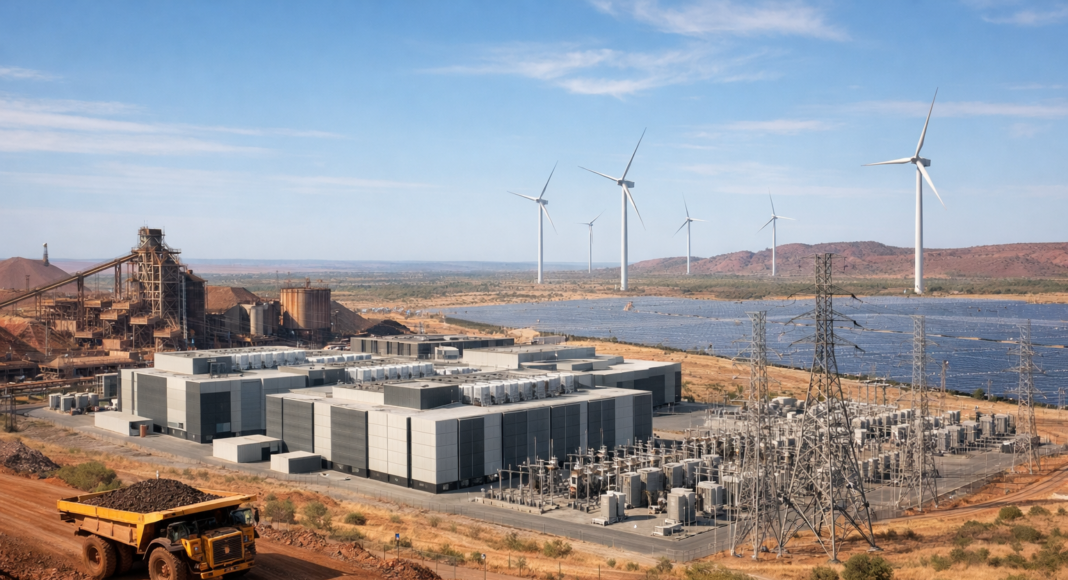

Fortescue AI Data Centres could become the company’s next growth platform as the miner explores developing artificial intelligence infrastructure in Western Australia’s Pilbara region. The proposal would leverage Fortescue’s renewable power network and existing industrial footprint to support growing demand for AI computing and cloud infrastructure.
According to media reports, Fortescue is considering a data centre development of up to 2 gigawatts near Port Hedland as it seeks additional customers for its expanding renewable electricity network. AI developer Anthropic has reportedly been identified as a potential partner, although neither company has confirmed an agreement.
Renewable Energy Network Could Support AI Infrastructure
Fortescue has committed US$680 million to expand its renewable energy capacity in the Pilbara, including a 200-megawatt project designed to supply industrial customers such as data centre operators.
The company said the investment builds on its existing mining power network and creates opportunities for new industries to operate using fossil fuel-free electricity. Fortescue AI Data Centres would utilise this renewable energy infrastructure to support the increasing electricity requirements of AI computing facilities.
Large AI data centres require reliable power to operate servers, cooling systems and supporting infrastructure. As artificial intelligence applications continue to expand, demand for high-capacity computing facilities is also increasing.
Fortescue’s existing landholdings, transmission infrastructure and operational footprint around Port Hedland could provide an advantage over developers that would need to secure land, build new power infrastructure and establish transmission networks before commencing operations.
Rather than supplying renewable electricity solely to third-party operators, Fortescue is reportedly considering owning and operating the facilities itself. This approach could allow Fortescue AI Data Centres to capture additional value from digital infrastructure while diversifying the company’s operations beyond iron ore production.
Regulatory Changes Could Influence Development
The proposal may depend on amendments to Western Australia’s Mining Act, which generally requires infrastructure developed on mining tenements to be directly associated with mining activities.
Fortescue is reportedly seeking reforms that would allow renewable power infrastructure located on mining tenements to supply unrelated businesses, including AI data centres. Such changes could enable the company to sell surplus electricity to third-party customers while making greater use of its existing Pilbara infrastructure.
However, legislative reforms, planning approvals, environmental assessments and engagement with Traditional Owners would remain important considerations before any project proceeds.
The proposal also reflects the growing convergence of mining, renewable energy and digital technology. Mining companies already possess many of the assets required to support large-scale data centres, including extensive landholdings, power generation systems, transmission infrastructure and experience delivering major industrial developments in remote regions.
Fortescue is also reportedly evaluating opportunities to use renewable electricity from its Holmaneset project in Norway to support future data centre developments, suggesting the Pilbara proposal could form part of a broader digital infrastructure strategy.
Although the proposal remains at an early stage and no formal agreements have been announced, Fortescue AI Data Centres highlight how mining companies are exploring new commercial opportunities that combine renewable energy, digital infrastructure and industrial development.