














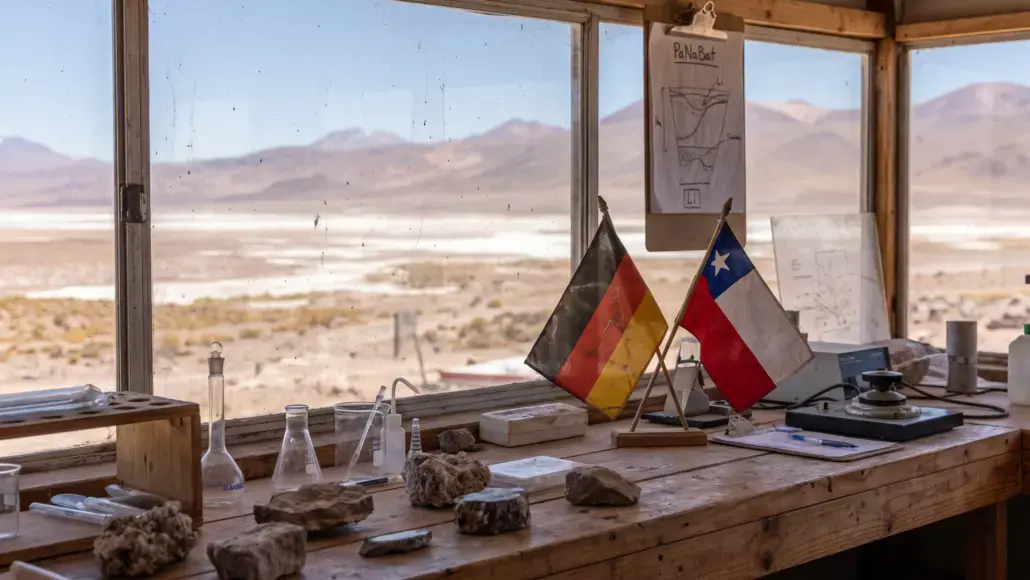

A new German-Chilean research initiative has been launched to accelerate collaboration on sustainable lithium extraction, battery recycling and critical minerals research, aiming to strengthen resilient battery supply chains while promoting cleaner production technologies.
The project, known as PaNaBat, will establish a long-term networking platform connecting research institutions, industry partners and technology developers from Germany and Chile. The initiative focuses on advancing sustainable battery raw materials, improving lithium extraction technologies and supporting the transition towards a circular battery economy.
The programme also seeks to diversify international supply chains for lithium and other critical minerals while encouraging technology transfer, industrial cooperation and academic collaboration between Europe and Latin America.
PaNaBat Platform Promotes Sustainable Lithium Technologies
The PaNaBat platform brings together leading organisations from both countries to develop resource-efficient extraction methods and next-generation battery recycling technologies.
Participants include Chile’s Universidad Católica del Norte through its Lithium I+D+i Center, Fraunhofer Chile and Germany’s Fraunhofer Institutes for Thin Film and Surface Technology (IST), Solar Energy Systems (ISE) and Silicate Research (ISC). Fraunhofer ISC is coordinating the project.
The collaboration comes as global demand for lithium continues to increase alongside electric vehicle and battery manufacturing. More than half of the world’s lithium reserves are located within the Lithium Triangle spanning Chile, Bolivia and Argentina.
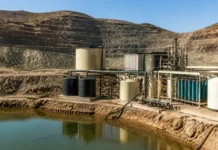
Conventional lithium production in Chile largely relies on evaporation ponds in the Atacama Desert, a process that has attracted growing attention because of its water consumption and potential environmental impacts in sensitive ecosystems.
To address these challenges, researchers involved in the PaNaBat platform are focusing on emerging technologies such as Direct Lithium Extraction (DLE) and closed-loop evaporation systems designed to improve efficiency while reducing environmental impacts. The project will also integrate ecological assessments tailored to local operating conditions to support more sustainable production practices.
Industry Collaboration and Circular Economy at the Centre
A central component of the initiative is the creation of a digital networking platform designed to connect companies, universities and research organisations working across the battery materials value chain.
Pilot projects have already begun during the platform’s initial development phase, allowing participants to test collaborative models before expanding to include additional industrial and research partners.
Beyond lithium extraction, the PaNaBat platform also supports the development of circular economy solutions for battery materials including lithium, cobalt, nickel and aluminium. Research activities will examine advanced recycling technologies featuring closed-loop material recovery, automated battery disassembly, innovative sorting methods and improved material processing.
Rather than recovering raw elements alone, researchers aim to preserve valuable material functionality so recovered compounds can be directly reused in battery manufacturing, improving resource efficiency and reducing waste.
The initiative also explores opportunities to produce lithium hydroxide and lithium carbonate using more sustainable Direct Lithium Extraction technologies while adapting mining and mineral processing expertise for battery recycling applications.
Environmental Assessment Supports Industrial Deployment
Environmental performance forms another major pillar of the project. Researchers will integrate Life Cycle Analysis (LCA), Life Cycle Engineering (LCE) and Integrated Computational Life Cycle Engineering (ICLCE) into technology development to evaluate environmental impacts during the earliest design stages.
By incorporating sustainability assessments throughout research and development, project partners aim to accelerate the commercial adoption of environmentally responsible battery technologies.
An industry advisory board made up primarily of German and Chilean small and medium-sized enterprises will provide technical guidance and support implementation throughout the project. The collaboration is expected to strengthen international partnerships while supporting more sustainable battery material production and resilient supply chains for the global energy transition.