










BHP says it has signed a memorandum of understanding (MoU) with Mitsubishi Development Pty Ltd to work together in the pursuit of emissions reductions, including from the life-cycle use of marketed products.
BHP and MDP are reviewing opportunities to undertake research, pilot new ideas, and develop and deploy new emissions reduction technologies, BHP said.
The collaboration with Mitsubishi Development forms part of BHP’s global program of projects in China, Canada, the US and Australia to progress low emissions technology. This is in addition to the near-term and longer-term targets BHP has set for emissions reductions within the company’s global operations.
BHP Chief Executive Officer, Andrew Mackenzie, said the MoU marked the start of an important collaboration with one of BHP’s essential long-term industry partners.
“BHP is committed to accelerating the development of emerging technologies that have the potential to achieve material reductions in greenhouse gas emissions,” Mackenzie said.
“Our new collaboration with Mitsubishi Development demonstrates the important role the private sector can play in bringing these technologies to market.
“Both companies are committed to emissions reductions in a range of industries, including the steel industry.
“Our Japanese partners and customers are critical to the development of new technologies and approaches to emissions reductions that stand to benefit countries across the globe.”
Mitsubishi Development Managing Director and CEO, Sadahiko Haneji, said the MoU is an important initiative for a company engaging in mineral resource activities in Australia, such as Mitsubishi Development Pty Ltd (MDP).
“Mitsubishi Corporation Group, and therefore MDP, is committed to simultaneously generating economic value, environmental value, and societal value through all business activities it conducts,” Haneji said.
“In line with this principle and guided by commitment to corporate social responsibility as well as global climate targets, MDP is enhancing its efforts to generate further environmental value, to help society transition to a low-carbon future.
“We are confident that this partnership with BHP will help us to achieve our goal, as well as contribute to the sustainable future of our local and global communities.”
Mackenzie said: “At BHP, we work with customers, suppliers and parties along our value chain to influence emissions reductions across the full life-cycle of our products.
“As well as investments in emerging technologies, we set greenhouse gas emissions reduction targets for our operations, we build the resilience of our operations and communities to the physical impacts of climate change, and we work across sectors to strengthen the global policy and market response.”
Examples of BHP’s low emissions technology investments include:
- Trials of light electric vehicles powered by lithium-ion batteries in BHP’s Olympic Dam underground fleet of light vehicles;
Participation in the Lakeland Battery Storage and Solar project featuring a 13 MW solar PV installation with storage of 5 MWhr in regional Queensland, Australia; - A $7.37 million three-year partnership with Peking University to identify barriers to Carbon Capture and Storage (CCS) deployment in the industrial sector, with a focus on the iron and steel industries, and;
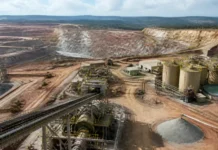
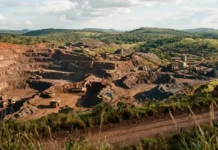
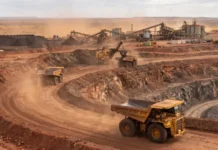
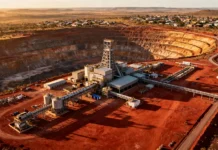
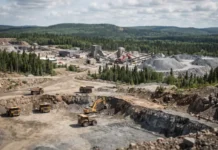
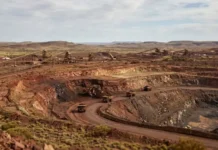
Around C$20 million ($15 million) to establish the SaskPower CCS Knowledge Centre at the Boundary Dam project in Saskatchewan, Canada, the world’s first commercial-scale CCS process on a coal-fired power plant. - BHP already has an existing partnership with MDP in the form of the BHP Mitsubishi Alliance (BMA), Australia’s largest coal producer and supplier of seaborne metallurgical coal. BMA, owned 50:50 by the partners, operates seven Bowen Basin mines, in Queensland (Caval Ridge pictured), and owns and operates the Hay Point Coal Terminal, near Mackay.