






The global mining industry is at a critical juncture where operational efficiency must be harmonized with an uncompromising commitment to environmental safety. At the center of this challenge is the management of tailings the byproduct of mineral processing that often contains significant volumes of water and residual chemicals. Tailings were previously viewed primarily as a waste management problem, but today, they are seen as a vital frontier for resource recovery. The emergence of tailings water treatment technology is fundamentally changing how mines operate, offering new ways to reclaim water, stabilize waste, and protect the surrounding environment from contamination.
As ore grades decline globally, the volume of material processed per unit of metal produced is increasing, leading to larger quantities of tailings. This scale of production necessitates more sophisticated treatment solutions that can handle high flow rates while achieving precise chemical outcomes. The goal is no longer just to store tailings, but to treat the associated water to a level where it can be immediately reused in the processing plant or safely released into local ecosystems. This shift is driven by a combination of water scarcity, tighter environmental regulations, and a growing recognition of the risks associated with traditional tailings storage facilities.
The Evolution of Liquid-Solid Separation
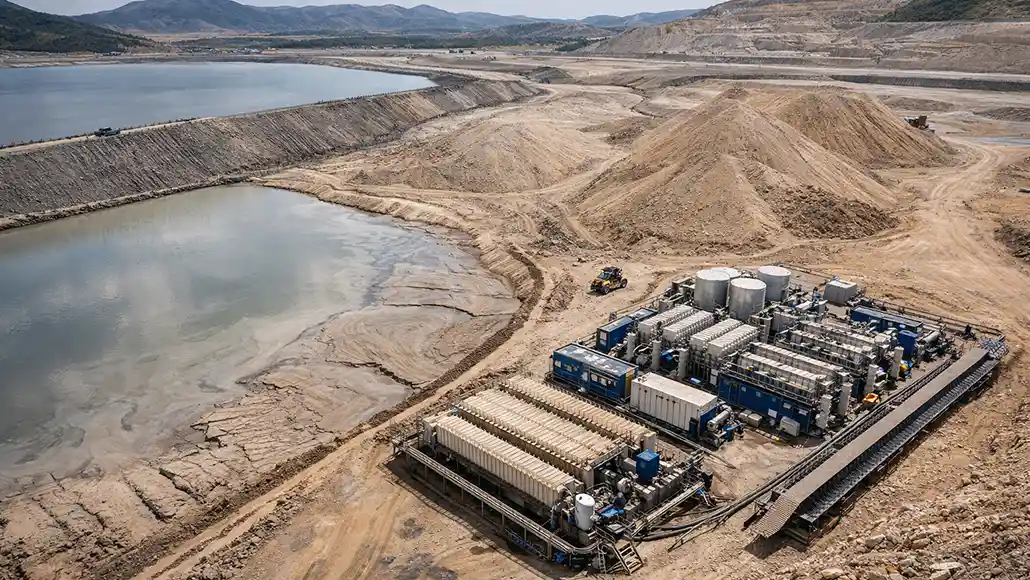
The most significant breakthroughs in managing tailings have occurred in the field of de-watering. Traditional tailings dams hold a slurry that is mostly water, which poses risks for dam wall stability and seepage. Modern tailings water treatment technology focuses on removing as much water as possible before the tailings even reach the storage facility. High-compression thickeners and paste technology have become industry standards, allowing mines to produce a “paste” that has the consistency of wet concrete. This not only recovers a huge percentage of process water for immediate reuse but also results in a much smaller and more stable footprint for the waste.
Beyond paste technology, the adoption of large-scale filter presses has enabled the transition to “dry stack” tailings. In this process, water is mechanically squeezed out of the tailings until they reach a moisture content similar to damp soil. This water is then filtered and returned to the plant, while the dry tailings can be stacked and compacted. Dry stacking virtually eliminates the risk of catastrophic dam failures and significantly reduces the potential for groundwater contamination. The initial capital cost of filtration plants is being increasingly offset by the massive savings in water procurement and the reduction in long-term environmental liability.
Advanced Membrane Applications in Tailings Recovery
While physical separation removes the bulk of the water, the chemical quality of that recovered water is equally important. This is where advanced membrane technologies are making a profound impact. Reverse osmosis (RO) and ultrafiltration, once considered too delicate for the abrasive environment of mining, have been redesigned for industrial durability. These membranes are now capable of removing dissolved salts, heavy metals, and residual processing reagents from tailings water. By cleaning the water to such a high standard, mines can maintain a consistent chemical balance in their processing circuits, which is essential for optimizing mineral recovery rates.
Innovations in membrane design, such as vibration-enhanced or high-shear systems, are solving the problem of ‘fouling’, where the membrane becomes clogged with fine particles. These technologies keep the membrane surface clean through mechanical action, allowing for continuous operation even with highly concentrated tailings streams. Furthermore, the development of ceramic membranes offers a robust alternative to traditional polymer versions. Ceramic membranes can withstand extreme pH levels and high temperatures, making them ideal for the harsh chemical environments often found in gold or copper processing operations.
Chemical Precipitation and Selective Ion Exchange
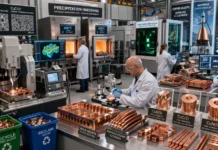
In many tailings streams, the challenge lies in the presence of specific contaminants that are difficult to remove through filtration alone. Breakthroughs in chemical precipitation have led to the development of more efficient and targeted reagents. These chemicals can be added to tailings water to bind with specific metals or salts, causing them to ‘precipitate’ or fall out of solution as solids that can be easily filtered. This method is particularly effective for removing contaminants such as arsenic, selenium, and sulfate that are often subject to very low discharge limits.
Selective ion exchange is another area of rapid advancement. This technology uses specialized resins that have a high affinity for certain ions. As tailings water passes through a bed of these resins, the target contaminants are captured, leaving the water clean. Recent innovations have produced resins that are highly specific, allowing for the recovery of valuable trace metals that would otherwise be lost to the tailings pond. This dual benefit is that cleaning the water while recovering value is a key driver in the adoption of tailings water treatment technology. It turns a cost center into a potential profit center, aligning economic interests with environmental goals.
The Integration of Biological Treatment Solutions
Nature often provides the most efficient solutions for complex chemical problems, and the mining industry is increasingly leveraging biotechnology. Passive and semi-passive biological treatment systems use engineered microbes to break down or sequester contaminants. For example, sulfate-reducing bacteria are used in anaerobic reactors to convert dissolved sulfates into stable and non-toxic solid metal sulfides . These biological systems are particularly well-suited for the long-term treatment of seepage from tailings facilities, as they can operate with very low energy requirements.
The use of algae and specific plant species in ‘phyto-remediation’ is also gaining traction. Constructed wetlands acts as natural filters, where plants absorb heavy metals through their roots and microorganisms in the soil break down organic reagents. These systems not only clean the water but also create new habitats for local wildlife, contributing to the eventual rehabilitation of the mine site. The challenge with biological systems has always been their sensitivity to temperature and seasonal changes, but modern engineering is overcoming this through controlled-environment reactors and robust microbial strains that can thrive in extreme conditions.
Real-Time Monitoring and Digital Optimization
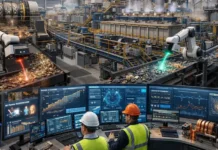
The effectiveness of any tailings water treatment technology is dependent on how well it is managed. The ‘Digital Mine’ movement has brought sophisticated sensors and data analytics to water treatment. IoT-enabled sensors now provide real-time data on water quality parameters like turbidity, pH, and metal concentrations at every stage of the treatment process. This data is fed into AI-driven control systems that can automatically adjust chemical dosages or flow rates to maintain optimal performance.
This level of precision is crucial for preventing ubfavourable conditions that could lead to environmental incidents. It also allows for predictive maintenance, where the system can identify a pump or a membrane that is likely to fail before it actually does. By creating a digital twin of the tailings water circuit, operators can simulate the impact of different treatment strategies without risking the actual operation. This transparency and control are essential for proving to regulators and communities that the mine is managing its water resources with the highest possible level of care.
Economic and Strategic Advantages of Water Recovery
While the primary motivation for treating tailings water is environmental, the economic benefits are becoming undeniable. In regions where water is scarce, the ability to recycle 90% or more of process water can be the difference between a mine being viable or not. The cost of desalination or long-distance water transport is often far higher than the cost of on-site tailings water treatment. Furthermore, the global shift toward circular economy principles is putting pressure on mining companies to minimize waste and maximize resource efficiency.
Investors are also paying closer attention to water management as part of their ESG evaluations. A company that utilizes advanced tailings water treatment technology is seen as a lower-risk investment because it is less vulnerable to water shortages and less likely to face catastrophic environmental liabilities. The brand value of being a green or sustainable miner is also growing, as downstream manufacturers like electric vehicle producers seek to secure ethically sourced raw materials. Water treatment is no longer just a technical necessity but a strategic move.
In conclusion, the breakthroughs in tailings water treatment technology represent a fundamental shift in the mining paradigm. By combining physical, chemical, and biological innovations with the power of digital data, the industry is proving that it can operate in a way that is both productive and protective. The transition from large, wet tailings dams to dry, stable, and treated waste is a significant step toward a more sustainable future for mining. As these technologies continue to evolve and scale, the industry will be better equipped to meet the world’s growing demand for minerals without compromising the integrity of our most precious resource, water.