


The European Union – EU has been paying greater significance to the strategic effects when it comes to concentrated supply chains in the last few years. Lithium has gone on to become quite an important resource for the 21st-century economy, just like oil was for the 20th-century economy.
It is well to be noted that China happens to make around two-thirds of the refined lithium supply in the world, and many European leaders are worried about what this means for the entire globe. Europe looks to build own lithium mining, manufacturing capabilities because demand for lithium is expected to grow fivefold by 2030. For many EU members, the first step in this process is to dig in their own backyards.
Mining companies are competing to develop promising new lithium discoveries across Germany and Serbia, as well as Portugal. For countries that do not have good lithium deposits, the only thing they can do is accumulate it. Stéphane Séjourné, the European Commissioner for Industrial Strategy, in an interview with Reuters, said that All European countries now have strategic reserves of oil and gas. We should do the same for strategic raw materials.
The Push from Europe Looks to Build Own Lithium Mining
Interestingly, it was thought that Europe only had 5% of the world’s lithium deposits at the beginning of 2026. There was only one commercial lithium mine in Europe, and it was in Portugal. The lithium was used to make ceramics.
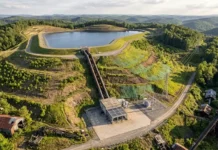
The European Union has now called Barroso’s lithium mining project of Portugal – strategic under the Critical Raw Minerals Act – CRMA. Production on a large scale could start at the site as soon as 2027. But there is local opposition to the project, and a rare report from the United Nations has gone on to criticize the lack of openness of the project. Environmentalists are also worried about the effects when it comes to mining operations and have spoken out against the rush by Europe for white gold in Portugal as well as other places.
Serbia’s Jadar Lithium Project and Strategic Interests of the EU
Serbia, which is not part of the European Union, has a lot of lithium deposits. Since 2012, the Eastern European country has been trying its level best to join the European Union.
Joannes Laveyne, who happens to be an energy expert at Ghent University, said, The European Union’s interest in Serbia was almost too good to be true it is claimed the country could provide up to 15% of Europe’s lithium needs alone.
Apparently, Jadarite, which is a mineral that is high in lithium, is only found in Jadar Valley of Serbia. Mining the stable mineral does not have as big of an effect on the environment as other lithium mining operations however, there are still political issues.
Mr. Laveyene said that questions about Serbia’s commitment to European ideals and, to a lesser extent, its ties to Russia are significant hurdles.
It is well to be noted that Rio Tinto, which is a global mining company, has supported the project for a long time and was happy to see the mine included in the European Union’s CRMA framework in the summer of 2025. But it said it was stopping operations in the area because environmental groups were against it.
Neven Cvetićanin, who is a fellow at the Institute of Social Sciences Belgrade and a former member of the Serbian parliament, said that Sooner or later, this or some new project about mining lithium will move forward in Serbia. Mr. Cveticanin further said that the political situation isn’t great for big projects. He adds that Serbia lacks several conditions, including political stability due to ongoing student protests.
Lithium Discovery in Germany and Europe’s Resource Potential
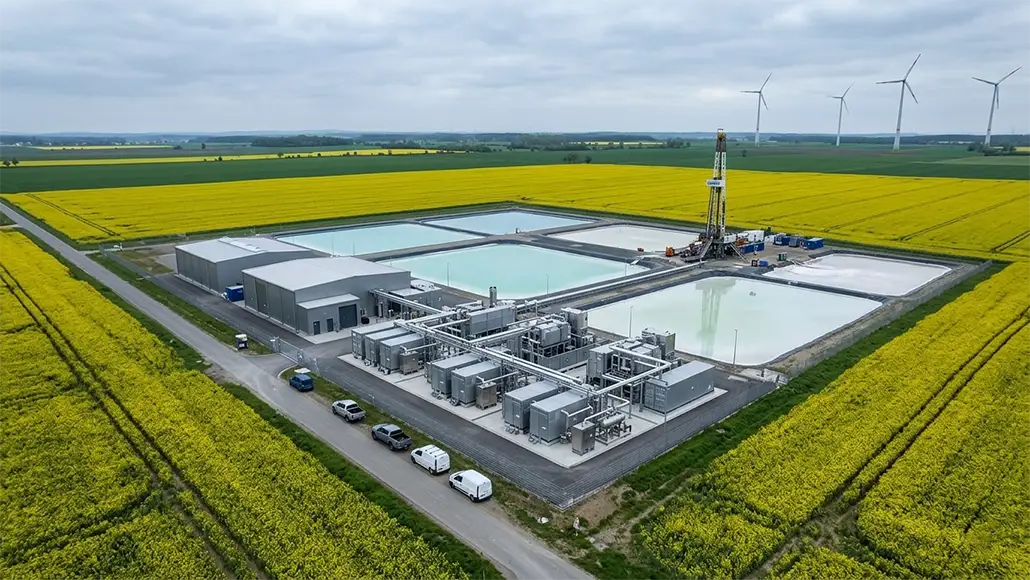
Other countries want to be sitting on the motherlode of white gold in Europe. Neptune Energy, which happens to be a company based in the UK, said that it found 43 million tons of lithium carbonate in Saxony-Anhalt, Germany. The company is looking to get the mineral out of brine in a way that would go on to use very little land.
A strategic mining analyst, Christopher Ecclestone, said, It’s a potential game-changer for the European Union’s lithium ambitions, and if validated, Germany’s reserves could put Europe on par with global producers.
If accurate, this discovery could as well be as big as South America’s Lithium Crescent, which runs through Bolivia and Chile as well as Argentina. The US has been buying lithium from this area for a long time, but there are certain political risks involved. In 2020, Bolivia asked for a lithium cartel like OPEC. In 2025, the government-run lithium company of the country went on to sign deals with Chinese and Russian businesses so as to help with development.
The Critical Raw Materials Act and Europe’s Lithium Plan
It was in 2024 that the European Union went on to pass the Critical Raw Materials Act. The law has sped up the progress when it comes to strategic mining and recycling projects. However, the quick rollout of the law drew criticism, particularly from Green Party lawmakers who go on to say that the approval process is not clear.
Apparently, there were 47 projects that were called strategic at the time the act was passed. Lithium happens to be involved in 22 of them in some way. Recycling lithium will also help to meet future demand.
Lithium could end up being the most significant aspect in determining who has the most industrial power around the world. The lithium mines in Europe want to change the way the world uses energy, one battery at a time. They get their lithium from the valleys of Serbia or from brine in Germany.