








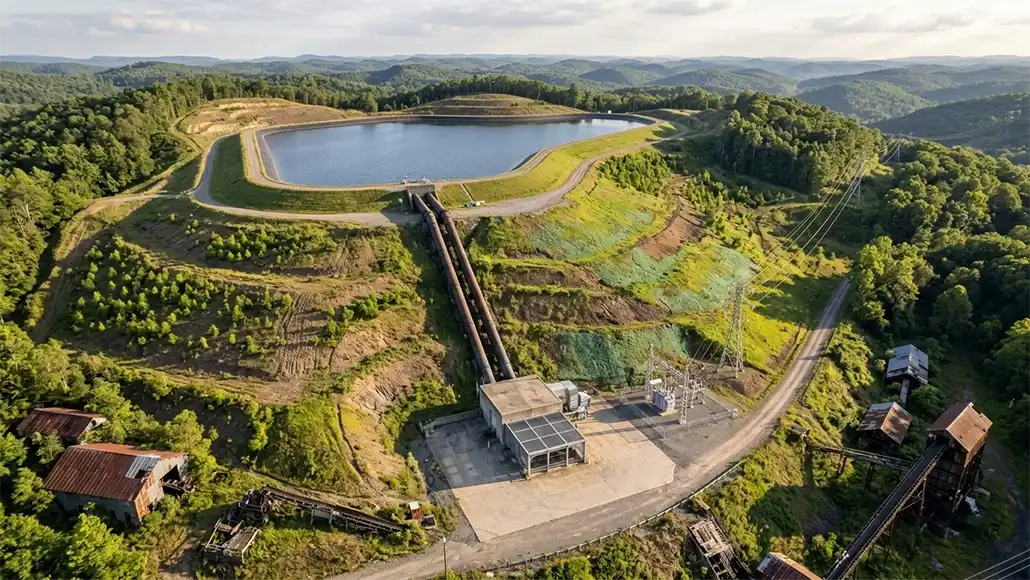

The Oak Ridge National Laboratory – ORNL researchers have gone ahead and successfully developed advanced modeling tools that could as well transform the thousands of abandoned coal mines of the nation into big underground reservoirs as far as energy storage is concerned.
Through creating high-fidelity hydrodynamic as well as chemical models, the team has gone ahead and cleared a prominent technical hurdle when it comes to determining how this kind of defunct site can get repurposed for Pumped Storage Hydropower – PSH.
This development provides a dual solution for the US energy spectrum as it offers the long-duration storage that is required for a carbon-neutral grid while at the same time revitalizing the former mining communities.
Reimagining the water battery
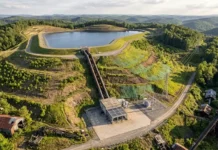
It is well to be noted that the traditional Pumped Storage Hydropower is often called a water battery, as it works through moving water between two reservoirs that are based at different elevations.
The fact is that when the energy is cheap or even abundant, like during a sunny afternoon, the water is pumped uphill. When the demand spikes, the water gets released by way of turbines in order to generate electricity.
While PSH at present comprises more than 90% of all the utility-scale energy storage across the U.S., its progress has been historically stalled because of geography. Standard facilities need massive mountains or hills in order to come up with the required height differential, which is also called the head.
Interestingly, the ORNL breakthrough shifts this paradigm through moving the operation underground.
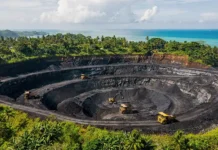
This approach makes use of the present infrastructure through making use of deep shafts of abandoned mines as a lower reservoir rather than building novel mountainside facilities.
Through doing so, the technology can get expanded to follow the geographic regions that were previously ineligible when it comes to hydropower. Apart from this, making use of these present tunnels and shafts prominently cuts down the cost of construction and also speeds up the rollout timelines.
Withstanding chemical erosion and stability risks
Repurposing a coal mine is indeed pretty intricate, as the environment that exists inside a mine is undoubtedly chemically active and also structurally complex. The senior researcher from ORNL, Thien Nguyen, went on to note that while the underground PSH is indeed quite an exciting opportunity, the industry has to first overcome the barriers of chemical erosion along with the stability of structure.
The fact is that the new ORNL models enable engineers to simulate accurately as to how water goes through such specific tunnels and how it actually tends to interact with the native minerals. This enables the researchers to forecast the corrosion risks through identifying how the leftover minerals might as well damage the turbines that are expensive.
It also helps the researchers to go ahead and evaluate structural integrity in order to make sure that the fast movement of water under high pressure does not lead to fracture or a collapse of the mine walls.
Says Thien Nguyen, “Underground PSH is an exciting opportunity, but we have to overcome challenges like chemical erosion and structural stability.”
Future economics along with system analysis
The fact is that now, the ORNL team is going towards a complete techno-economic evaluation.
The science writer at Oak Ridge National Laboratory, Galen Fader, opined, “Our modeling tools will help industry partners evaluate these risks and make informed decisions about facility design, construction, and operations at specific locations of interest.”
Notably, the researchers also look forward to conducting system efficiency analyses in order to ascertain the best practices when it comes to facility construction along with operations at certain specific locations of interest.
Through turning the environmental liabilities into grid-scale assets, the research could soon enable the very mines that at one point of time powered the industrial age to balance and stabilize the future of clean energy.