











The global copper industry is currently navigating a period of unprecedented change, driven by the dual pressures of declining ore grades and an exponential surge in demand from the green energy sector. Historically, copper mining relied on the sheer scale of operations to maintain profitability, but as high-grade deposits become increasingly rare, the focus has shifted toward technological sophistication. The current wave of copper processing innovations represents a paradigm shift in how we approach mineral liberation, separation, and refinement. These advancements are not merely incremental; they are essential survival strategies for an industry tasked with providing the literal wiring for a low-carbon future. By optimizing every stage of the processing circuit from initial comminution to final electro-refining mining companies are managing to extract more value from lower-quality rock while significantly reducing their energy and water footprints.
Advancements in Precision Comminution and Particle Fragmentation
At the heart of any mineral processing operation is comminution, the energy-intensive process of crushing and grinding ore to liberate valuable minerals from the surrounding waste rock. For decades, this stage has been dominated by massive semi-autogenous (SAG) and ball mills, which are notorious for their high electricity consumption and mechanical wear. However, new copper processing innovations in High-Pressure Grinding Rolls (HPGR) are redefining the efficiency of this critical phase. Unlike traditional mills that rely on impact and abrasion, HPGR technology utilizes inter-particle compression, which is inherently more energy-efficient and effective at creating micro-fractures within the ore.
These micro-fractures are particularly significant because they facilitate better chemical penetration during subsequent leaching or flotation stages. By reducing the overall energy required to achieve a specific grind size, HPGR systems allow mines to process harder ores that were previously considered uneconomical. Furthermore, the development of vertical stirred mills has provided a more efficient solution for fine and ultra-fine grinding. These mills use gravity and a stirring mechanism to achieve a consistent particle size with much less heat generation and energy waste than horizontal ball mills. This precision in particle fragmentation ensures that the mineral liberation is maximized, setting the stage for higher recovery rates in the downstream circuits.
Evolution of Flotation Chemistry and Cell Design
Once the ore has been finely ground, it enters the flotation stage, where chemical reagents and air bubbles are used to separate copper minerals from the gangue. Traditional flotation cells have remained largely unchanged for decades, but recent copper processing innovations have introduced a new generation of high-intensity cells, such as the Jameson Cell and the Concorde Cell. These systems utilize pneumatic mechanisms to create a high-energy environment with ultra-fine air bubbles. The increased surface area of these smaller bubbles allows for the capture of fine copper particles that would typically be lost in conventional mechanical cells, directly improving the overall extraction efficiency.
The chemistry of flotation is also seeing a quiet revolution. New collector and frother formulations are being designed using advanced molecular modeling to target specific copper mineralogies with higher selectivity. These reagents can operate effectively across a wider range of water qualities, including recycled or brackish water, which is a critical advantage in water-stressed mining regions like the Atacama Desert. By improving the selectivity of the flotation process, mines can produce a higher-grade concentrate with fewer impurities, such as arsenic or bismuth. This high-purity concentrate is not only more valuable but also reduces the energy and chemical requirements of the subsequent smelting and refining processes.
Intelligent Ore Sorting and Pre-Concentration
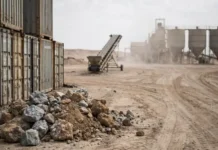
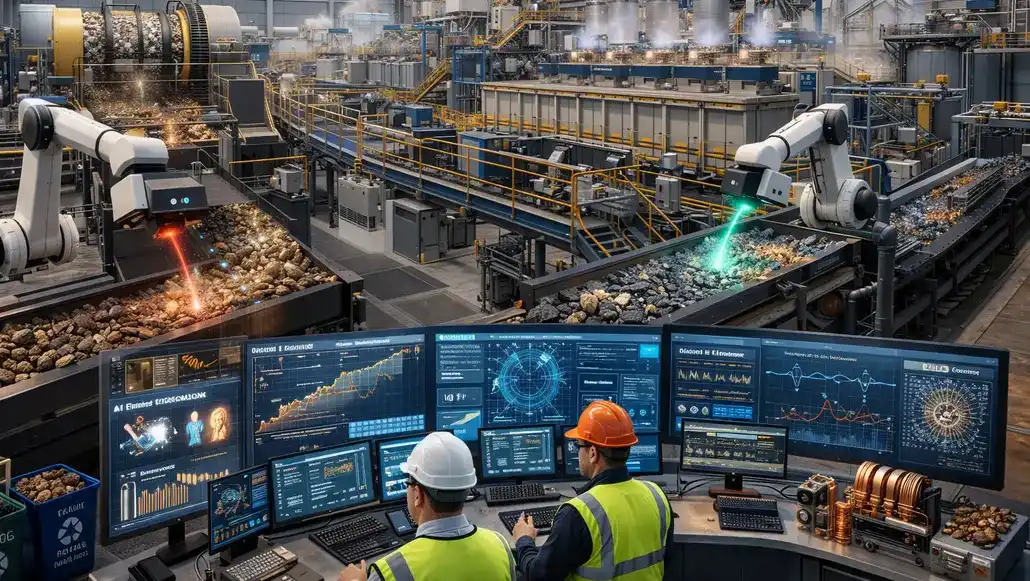
One of the most impactful copper processing innovations in recent years is the implementation of sensor-based ore sorting at the very start of the processing line. By using X-ray transmission (XRT), near-infrared (NIR), and laser sensors, mining companies can now identify the mineral content of individual rocks as they pass along a conveyor belt at high speeds. Rocks that do not meet a certain grade threshold are mechanically ejected before they ever enter the energy-hungry grinding circuit. This process, known as pre-concentration, ensures that energy is only spent on material that contains a meaningful amount of copper.
The implications of ore sorting for mining automation and efficiency are profound. By removing up to thirty percent of barren waste rock early in the process, mines can effectively increase their plant capacity without expanding their physical footprint. This leads to a significant reduction in the volume of tailings produced, which is one of the most pressing environmental challenges in modern mining. As sensor technology becomes more sensitive and processing power increases, the ability to sort ore based on complex mineralogical characteristics will become a standard feature of any modern copper mining technology stack.
The Role of Mining Automation in Real-Time Process Optimization
The transition from manual or basic automated control to fully integrated mining automation is perhaps the most significant driver of efficiency gains in copper refining and ore processing. Modern processing plants are now equipped with thousands of sensors that monitor every variable, from mill vibration and slurry density to the chemical composition of the froth. This data is fed into advanced control systems that use machine learning algorithms to make millisecond-by-second adjustments to the process. For example, if the system detects a change in the hardness of the incoming ore, it can automatically adjust the feed rate or the mill speed to maintain optimal performance.
This level of real-time optimization reduces the variability that often plagues human-led operations. When a human operator might be reactive to a problem, an automated system is proactive, predicting potential disruptions before they occur. In the flotation circuit, vision-based sensors can analyze the color, size, and velocity of the bubbles in the froth, allowing the system to adjust air flow or reagent dosage to maintain the highest possible recovery. This “smart mining” approach ensures that the plant is always operating at its peak efficiency, maximizing the output of copper processing innovations while minimizing the waste of resources.
Digital Twins and Predictive Maintenance Strategies
A critical component of modern mining automation is the use of “Digital Twins” virtual, data-rich models of the physical processing plant. These digital replicas allow engineers to run complex simulations to see how changes in one part of the circuit will affect the entire operation. If a mine wants to test a new copper processing innovation, such as a different reagent or a change in grind size, they can do so in the virtual environment first. This reduces the risk and cost associated with physical experimentation and allows for much faster iteration and improvement of the processing flow sheet.
Furthermore, these digital systems enable a shift from reactive to predictive maintenance. By monitoring the “health” of critical equipment like crushers and pumps in real-time, the system can identify subtle signs of wear or impending failure that would be invisible to a human inspector. Maintenance can then be scheduled during planned downtime, preventing the catastrophic costs and safety risks associated with unplanned equipment failures. In an industry where a single day of downtime can cost millions of dollars, the value of predictive maintenance as a part of a comprehensive mining automation strategy cannot be overstated.
Integrating Hydrometallurgy and Bio-Leaching for Low-Grade Ores
For oxide ores and increasingly for low-grade sulfide deposits, hydrometallurgical processes like Solvent Extraction and Electrowinning (SX-EW) are becoming more sophisticated. One of the most promising copper processing innovations in this field is the use of bio-leaching, where naturally occurring microorganisms are used to catalyze the oxidation of sulfide minerals. This biological approach allows for the recovery of copper from waste piles and low-grade heaps that were previously considered “un-mineable.” Bio-leaching is particularly attractive because it requires significantly lower capital and operating costs than traditional smelting and can be applied to very large volumes of low-grade material.
The evolution of copper refining through hydrometallurgy also includes the development of more efficient solvent extraction reagents that can handle higher concentrations of impurities. This allows for the processing of more complex ores while still producing the high-purity copper cathodes required by the market. When paired with mining automation, these hydrometallurgical plants can be operated with a very high degree of precision, ensuring a consistent and reliable supply of metal. As the industry continues to move toward more difficult ore bodies, the ability to combine biological and chemical processes will be a key differentiator for successful copper mining companies.
Future Horizons in Copper Mining Technology
As we look toward the next decade, the focus of copper processing innovations will likely shift toward “waterless” or “low-water” processing. Given that many of the world’s most productive copper regions are located in water-stressed areas, the development of dry grinding and dry separation techniques is a major research priority. Furthermore, the industry is exploring the use of high-power microwaves to induce thermal stress in ore particles, potentially reducing the energy required for grinding by up to fifty percent. These experimental technologies represent the next frontier in extraction efficiency and will be essential for the long-term sustainability of the industry.
The integration of these various copper processing innovations from the physics of fragmentation to the intelligence of digital twins is creating a more resilient and efficient mining sector. By embracing the complexity of modern metallurgy and the power of mining automation, copper producers are ensuring that they can meet the world’s growing needs without compromising on economic or environmental standards. The future of copper mining is not just about digging bigger holes; it is about building smarter, more efficient processing systems that can unlock the value of every single ton of ore.