












ACHEMA MIDDLE EAST

Experts say Wollongong Coal expansion poses a threat to water sources in Sydney

Note* - All images used are for editorial and illustrative purposes only and may not originate from the original news provider or associated company.

Subscribe

- Never miss a story with notifications

- Gain full access to our premium content

- Browse free from any location or device.

Media Packs

Expand Your Reach With Our Customized Solutions Empowering Your Campaigns To Maximize Your Reach & Drive Real Results!

– Access the Media Pack Now

– Book a Conference Call

Leave Message for Us to Get Back

Related stories

Autonomous Truck Fleet to Grow at Pará Iron Ore Mining Sites

Vale, Caterpillar as well as Sotreq, have signed an...

Germany and China Mend Ways on Rare Earths and Chips

In a recent move, China and Germany have rapidly...

UK Introduces Critical Minerals and Rare Earths Strategy

Keir Starmer, the UK Prime Minister, has announced a...

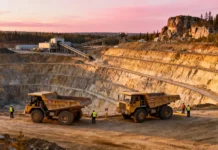
Scientists warn that a proposal by Wollongong Coal to expand its operations into the Lake Cataract catchment in Australia may put Sydney’s drinking water at risk.


Lake Cataract catchment is one of the main drinking water resources for Illawarra and Macarthur regions in New South Wales and is a back-up resource for Sydney.


Wollongong Coal has proposed an extension to its Russell Vale colliery that would move it nearer the catchment area. The two-phase underground expansion project is awaiting approval from the New South Wales Department of Planning.


The company proposes to mine 4.7 million tonnes of coal over five years.


However, the Independent Expert Scientific Committee has prepared a report that raises various issues over the company’s proposal, such as shortcomings in the water modelling done by Wollongong Coal, reported ABC.


The report said: “It is considered very likely that there will be significant impacts to water resources.


“The final risk assessment underestimated the overall risk to these swamps.”


The report recommended a change in the layout of the mine to protect the surrounding swamps.


Local environmental scientist Dr Ann Young said: “They are very important in drought conditions.


“This is the place which nearly always is supplying to water to the dam and, of course, the swamps are nearly always the source of that in dry times.”


The report came to light as the department of planning and environment (DPE) approved the interim expansion operations at the mine.


Wollongong Coal said in a statement to ABC: “A large number of the issues and potential impacts raised by the IESC were raised by, and subsequently resolved with NSW Government regulators as part of the NSW planning process.”

Latest stories

Related stories

Autonomous Truck Fleet to Grow at Pará Iron Ore Mining Sites

Vale, Caterpillar as well as Sotreq, have signed an...

Germany and China Mend Ways on Rare Earths and Chips

In a recent move, China and Germany have rapidly...

UK Introduces Critical Minerals and Rare Earths Strategy

Keir Starmer, the UK Prime Minister, has announced a...

CATL, EACON Partner to Reform Autonomous Haulage Systems

Contemporary Amperex Technology - CATL and EACON Mining Technology...

Subscribe

- Never miss a story with notifications

- Gain full access to our premium content

- Browse free from any location or device.

Media Packs

Expand Your Reach With Our Customized Solutions Empowering Your Campaigns To Maximize Your Reach & Drive Real Results!

– Access the Media Pack Now

– Book a Conference Call

Leave Message for Us to Get Back

Translate »